For Christmas this past year, my lovely wife got me two new board games for our collection- Scythe and Concordia. We had a chance to play both before and wanted to make sure we had the games available to play any time. We have gotten a chance to play both games since and have had a great time playing each game- I highly recommend them both for people who like games like Settlers of Catan and other expansion/building games.
Since I have played both games recently, I thought it would be fun to do a comparison review and pit the games against each other as a way to kill two birds with one stone. I have set up 5 categories and given my thoughts for each, but first let me give quick summaries of the games:
Concordia-
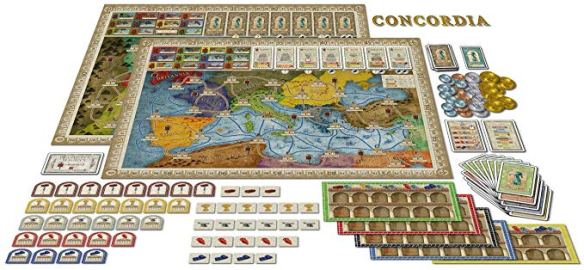
Published in 2013, Concordia is a game based on the expansion of the Roman Empire. Described as a peaceful strategy game, Concordia focuses around expanding your foothold across the Mediterranean Sea by acquiring resources, adding colonists, and expanding your deck of cards which ultimately count towards your total points for the game.
Scythe-
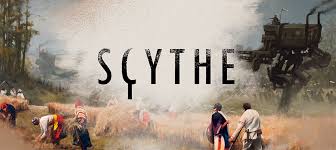
Set in an alternate reality with a 1920’s Steam Punk aesthetic, Scythe focuses on farming for resources, building Mechs and structures, enlisting recruits and fighting for territory on the board. Created in 2016, the engine-building feature of the game focuses on taking specific actions each turn and upgrading each type of action to be more efficient.
This obviously only scratches the surface of what these games are about, so let’s dive into the different review categories I created where we can go through the game in more detail.
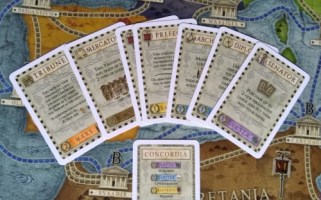
Game Quality/Artwork- The first thing I can say about each game is that they are both beautiful quality with great design all around. Both games match the theme they created quite well, with Concordia having a classic feel with bright colors across the map, and Scythe diving into a darker and more gritty look. Scythe has more opportunities to show off beautiful artwork, with it’s player and faction mats and action cards all having expansive drawings of different characters and events in this self-contained world. Concordia’s cards are more simple but match the theme well, feeling like scrolls with a different message included on each.



The one area I would say that both games were a bit lacking is the resource pieces: to me, this isn’t a major flaw, but it is something I noticed when playing both games. The resources you accumulate are represented by wooden pieces, and while the quality of the wood is good the shape and look of the resources themselves is a bit bland. The best example I can give is the Food resource in Scythe- to me it looks like a pot of gold which was somewhat confusing when I first played the game.
Note: I have the base version of each game, and after some research I saw that both games have enhanced versions with pieces that were better quality. I completed reviews based on the game versions that I had. Below is an example of the differences between Scythe’s pieces, with the base ones I have on the bottom:

WINNER: Scythe
Rules- One thing that is important to know about these games is that they are complex and have a large number of different rules and components. Each rule book is substantial and there is a lot of time dedicated to understanding the flow of the game and the different components. Game setup was straightforward for both games, with clear pictures in the rules showing how the board should be set up and step by step instructions for where everything goes.
Of the two games, I feel like Concordia had a slightly better set of rules that were easier to follow. This might be because the game mechanic is a bit more straightforward, but when I read the rules of Concordia I knew the purpose of the game more at the beginning and felt more comfortable with the gameplay as a whole. Scythe feels more like a game that you should play with friends who have already played- trying to learn everything without guidance can be very difficult. In particular, rules for resource collection and movement feel more complicated than normal games and take time to fully understand.
WINNER: Concordia
Gameplay- By far the most exciting thing about these games is that they both have completely unique game mechanics from any other games I have played- they both are innovative and provide a great new style of gameplay for my game collection. Each one has its strengths and it’s honestly tough to say which style is better.
Scythe focuses on a gameplay mechanic where you can choose 1 of 4 options on your Faction card, each with 2 separate playable options. This means that in total there are 8 actions you can play each turn, and you can choose to take 1 or 2 actions depending on your resources and situation during your turn. These actions include moving your pieces, trading and farming for resources, enlisting for special effects, upgrading your board to produce more and cost less, deploying powerful and versatile mechs, bolstering your power/gold/popularity, and building structures on the board. The interesting part of the gameplay is that you can’t take the same action twice in a row, so you have to strategize how to play each turn and think a few turns ahead, while adapting to other player’s actions on the board.


Concordia, meanwhile, uses a card-playing mechanic that gives each player their own personal deck with different abilities on each card. You start with your whole hand available to you, and each time you play a card and take that action, your hand gets a bit smaller. Eventually you can choose to take a turn to pick up all of your cards again, but waiting to do this until later is preferred because you get money bonuses the longer you take. Card actions available in the game include moving colonists, producing resources for players in a specific territory, gaining coins, trading resources, purchasing new cards to add to your deck, and copying the effects of an opponent’s previously played card.


WINNER: Tie
Scoring- Another complicated component to these games is how they are scored- both games have a scoring mechanic based on the resources and goals accumulated throughout the game, and both games have a twist on how these points are accumulated. Concordia’s scoring is based on the number and type of cards in your hand at the end of the game- the more cards of a particular type, the more points you get for that card’s effect (example, scoring points based on the number of territories you control). Scythe, meanwhile, has the same scoring for each player but the multiplier is based on how popular your character was based on their actions throughout the game. You can gain or lose popularity through a number of different actions, and at the end of the game you fall under three tiers of popularity, with the highest tier scoring you the most points.
The biggest issue I had with scoring is that it felt like I didn’t really understand HOW to score in order to win the first time I played the games. Both Concordia and Scythe feel like games where you need to play at least once or twice before you are able to grasp the full strategy of gameplay. If this were a bit clearer upfront, it would make people first playing the games more comfortable with their moves and decisions. I felt like of the two games, this was more the case in Scythe than Concordia, which is why I give Concordia a slight edge in this category.
WINNER: CONCORDIA
Play Time- If you don’t like board games with long play times, don’t play these games… especially your first time playing, these are definitely multi-hour games. The time goes by quickly for both, but it definitely is surprising how quickly you lose the day or night as you play.
Technically speaking, both Concordia (100 mins) and Scythe (90-115 mins) are clear about this upfront. However, I would mention that in both cases I have usually gone over the expected times for these games. This definitely feels like it is because I am still learning the rules or playing with people who are learning the rules, but it’s important to mention nonetheless.
WINNER: Tie
Overall- I know that I have brought up some criticisms in this review, but in reality the areas that I had issue with were minor inconveniences at most. In reality, both of these games are amazing and I plan to include them in my regular gaming rotation.
If I were to choose between these two games, my personal preference has to be Concordia. Scythe is brilliant and I enjoy the gameplay and feel, but Concordia feels like a more straightforward game to me while still being just as exciting. The gameplay is fast paced, with turns going quickly, and everyone is engaged during turns to see how people make their moves and how much more time they have. Overall, both games are worth your time and money, but if you were going to pick up only one from stores today then Concordia would be my recommendation.
WINNER: Concordia (4.5 out of 5)
CONSOLATION: Scythe (4 out of 5)
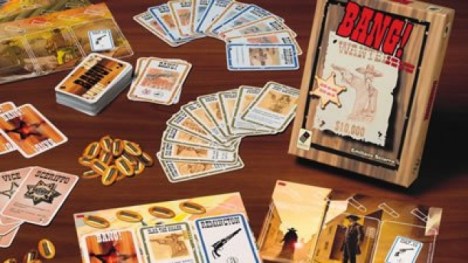
 Playing cards is the majority of the turn, and there are a number of different cards with varying immediate and long term effects. The most crucial cards are Bang! cards, which allow you to shoot anybody within range. Once you declare who you shoot, that player has the opportunity to play a Missed card, which lets them avoid taking damage. If a Missed card isn’t played, that player loses one hit point. Lose all of your hit points, and you are out of the game. The game ends when either the Sheriff is killed, or all Outlaws and Renegades are killed.
 The strategy involved with this game took some getting used to, but once you get the hang of things it becomes fun and engaging. Knowing who the Sheriff is gives him/her a disadvantage, but the Sheriff also gets an additional hit point, gets to go first, and in certain instances has deputies to help. In addition, the Renegade only wins if the outlaws are killed before the Sheriff, so the player who is the Renegade has to work to harm the Sheriff without them dying and take out the rest of the characters first. The outlaws seem to have the easiest job, but with a number of other characters having different motivations sometimes tipping your hat too early and going straight for the Sheriff can make things difficult for you. Overall it feels like you are able to win as any of the characters (in our first round the Sheriff won and then in round two the Outlaws won), so there’s a good sense of balance that some competitive games lack. Another fun aspect of the game is the shooting distance- shooting distance is based on who you are sitting next to, meaning it is easier to shoot someone next to you than someone with multiple people in between. There are weapons and abilities to enhance your ability to shoot, but there are certainly times when you are restricted in your ability to use Bang! cards on people.

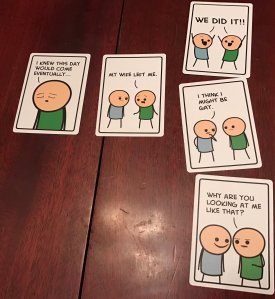 are a huge number of possibilities and directions you can take when playing a card. At first when I read my cards I assumed there was no way I would be able to use some of them, but sure enough a round came along where they were the perfect fit. In addition, the fact that the judge gets to play one of the cards is a huge positive in comparison to CAH and Apples to Apples. The judge actually gets to shape the story the way they see fit, which can very quickly add to the hilarity.


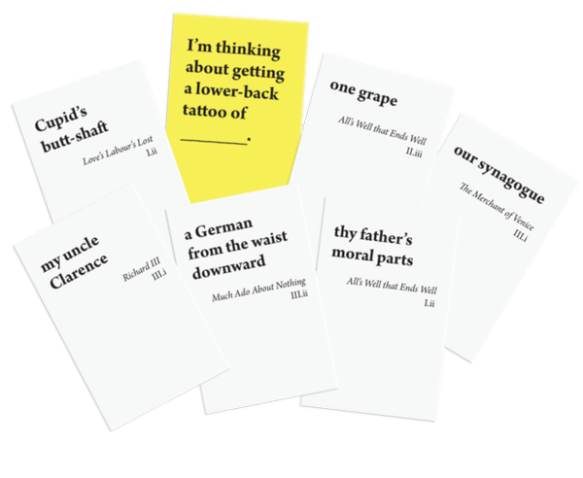
 or the first time and feeling like everybody knows what to do, and even better it doesn’t feel like the same game you’ve always played because of the new cards and style. I also appreciate that the game is a bit more highbrow in its profanity- in no way does the game avoid dirty jokes, but it does find a way to make them more intellectual. Finally, the game is a great for social events and can be played with any number of players.


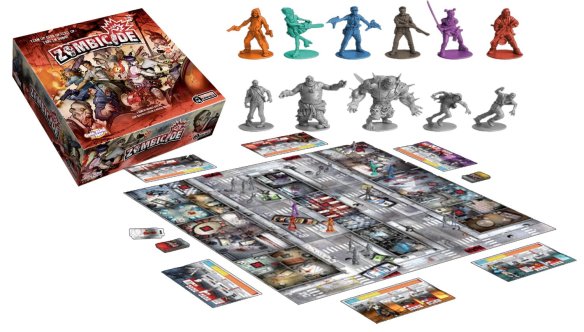
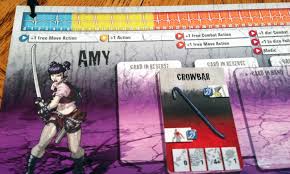 points, you equip weapons that you find by searching a room/area, and you have the option of trying to be sneaky or barging in guns blazing. The underlying premise is to move from different “zones” on the map and either defeat zombies, find items, or reach objective points depending on the situation at the time. All while this is happening, more zombies are arriving and looking for a way to get to you and eat your brains. There are rules for combat, item usage, and taking damage, and after each turn new challenges form that you have to overcome. Because the game is cooperative, if a character dies your team can still win; it is possible to sacrifice yourself to keep your teammates alive as they reach their mission objective.


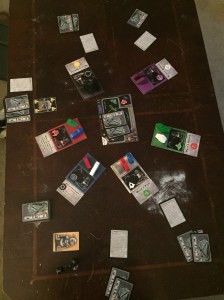


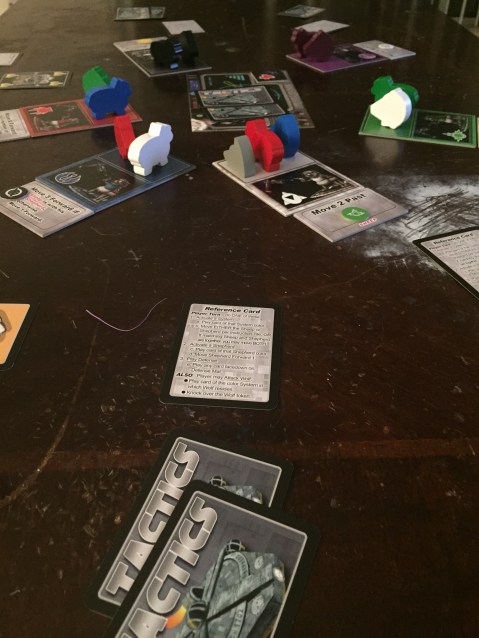


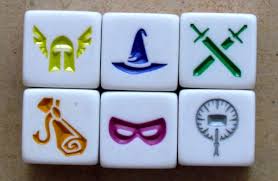 e and gain even stronger abilities. Once each player has a Hero card, the player who starts first rolls the white party dice to assemble his/her “party”. This party can consist of up to 6 different options, including five different classes (Champion, Wizard, Fighter, Rogue, and Cleric) and also a scroll dice which allows you to reroll any dice once. Once the party has been assembled, the player to the left of the one who rolled the party acts as the Dungeon Lord. The Dungeon Lord is in charge of rolling enemies for the party to fight.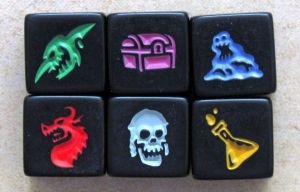
 re 3 dragon dice total. Once the third dragon is rolled, the party has to fight the dragon, which can only be defeated by sacrificing three different class dice. Once you defeat a dragon, you can an extra experience and can grab a treasure chip from the treasure chest.


 The Boardwalk Games