Board Games Outside the Comfort of Home

Most of the time when I set out to play a board game, the setting is very specific: I usually want to play in the comfort of my own home or potentially a friend’s home. Not often do I veer from that preference, but sometimes I do feel like venturing out into the world and playing games in different locations. But what locations are fit for board games? For a while it felt like if it wasn’t in a house, it wasn’t going to happen, but recently I’ve been finding different locations cropping up out in the real world where board games aren’t just accepted, but encouraged. Here is a list of the 5 types of locations that are becoming “board game friendly”.

Bars/Breweries

Back in college I remember discovering that one of my favorite pastimes was hanging out with my friends, having a few drinks, and playing board games. At 25 this preference hasn’t changed much- I find myself spending plenty of days with friends playing games with a few beers or glasses of wine. I’ve always considered this type of activity more relaxed than the active, lively crowds that I join when I go out to a bar.

Surprisingly enough, there are places across the country combining these two seemingly different activities. Suddenly there are bars out there that you can play board games in. Some of them you can bring your own, others rent them out to you for use while you drink and chat with friends. I know of a few in the Washington D.C. area near me (my favorite is a place called Board Room), but from a simple Google search you can find locations in New York, Chicago, and Los Angeles that have the same theme.

Board Room DC

Breweries fall into the same category- while they are usually more laid back than your average bar, the main purpose for going to a brewery is to have a few drinks and enjoy yourself with friends. Adding board games into the mix is slowly becoming more popular, with multiple breweries popping up with board game themes and outdoor areas being set up to play games that you bring with you. Breweries are taking advantage of the trend by inserting themselves into the gaming lifestyle- check out an interesting article about the phenomena by the Huffington Post.

Conventions

While comic books, anime, and TV shows still control the lion’s share of the conventions out there, board games have been able to find a slice of the pie in many of the more popular “cons” scattered across the US. Gaming tournaments, booths, and prizes are staples of almost all conventions that you would go to, and conventions tailored specifically to board games are also becoming more prevalent. A list of board game cons can be found on Board Game Geek, highlighting some of the best places to check out new/developing games in the market.

Board Game Shops

Shops dedicated to selling board games have been around for a while. In fact, it might be that they are less common now than they were before the internet took some of the board game sales from the “mom and pop”-type shops. Still, most areas have at least one local gaming store, which can include anything from card games to miniatures to traditional board games as well. These game stores have to find ways to attract old and new customers, and board game nights/board game tournaments are a big pull for weeknights and weekends.
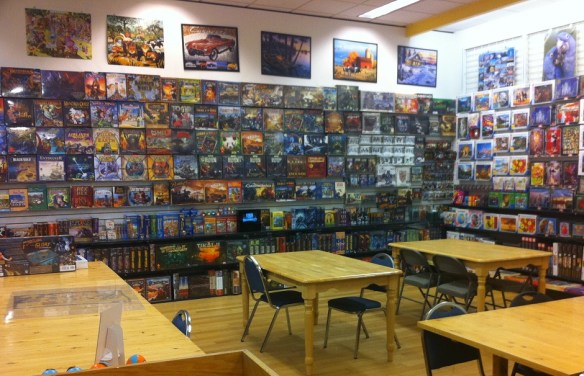
Board Game Shop

Cafes

This new trend is the most fascinating to me- the Atlantic posted an article back in 2014 about How Board Games Conquered Cafes, and I tend to agree with them based on what I’ve seen. The focus of the article is a lot on families enjoying board games in coffee shops and cafes as a cheap way to get out of the house, enjoy some time with the kids, and play some games that everyone enjoys. That’s not the only option though, as the cafes are also great places for after-school activities of teens or a way to unwind for adults who spend their day sitting at a desk typing on a computer.

board game cafe

Based on what I’ve seen from personal experience, I can certainly verify that board games are making their way out into the world more often as time goes by. I always stress the social aspect of gaming, so seeing more and more location for playing board games crop up is very encouraging. That being said… I don’t expect game night at home to be going away any time soon.
Kickstarter Campaign: Sans Allies

sans allies logo

Over the last 6 months of blogging, I have been lucky enough to connect with a number of other bloggers who share my passion for board games. Geoffrey Greer, writer of Past Go Gaming & Geeking, has been a big part of that connection. Geoff is a teacher with a passion for history and geeky topics, so he has a ton of great articles about a number of interesting subjects from Monopoly in American Culture to Howard the Duck. Going back the past few months, it’s rare to see a post I’ve made that doesn’t include a like or a comment from Geoff. I have always appreciated his activity on my blog, and the articles he writes are all very cool, so when I heard about his new game I jumped on the chance to try it out. Geoff and his wife Valerie have created a solitaire game called Sans Allies that is currently on Kickstarter. They have also added a prototype online, which I printed out and played over the weekend. Below is a brief description of the game and its rules, as well as a few important points about the game’s strengths and why I think you should back it on Kickstarter!

Sans Allies is a single player game with a very similar style to Pyramid Solitaire. The game has a 20th century war theme and revolves around fighting through enemy lines to capture the Enemy Capital before time runs out. The Enemy Capital is always at the very top of the pyramid, which means that in order to reach it you have to make your way through a number of different types of land, all while trying to build up your own forces and stop the enemy from developing their “ultimate weapon.” The game mechanics seem daunting when you first open up the instructions, but they are quick to pick up as long as you thoroughly read through the rule book before you play and then keep it on hand the first time you try the game. All in all, it only took me about 10-15 minutes to learn the “Limited War” gameplay (simplified rules) and only an additional 5-10 minutes to learn the “Total War” rules (complete rules). The first game I played took about an hour, but once I got the hang of it and was playing at a faster pace I found myself finishing a round in slightly over 45 minutes.

The game feels a lot like a single-player version of Risk to me – in order to “invade” a space and move closer towards the Enemy Capital, you roll two dice and either lose or maintain troops based on the number you rolled. This means that how and when you sans allies cardsdedicate your troops to an invasion is a crucial part of the game. You gain troops each turn, but after every turn the enemy has a chance at improving their ultimate weapon, so you can’t sit around and stockpile troops for too long. Sans Allies is also similar to the game Axis and Allies because there are different types of troops that can be used; you have personnel (ground troops), vehicles (tanks), aircraft (planes), and ships. Each type of territory you try and invade has specific types of troops that can and can’t access it. For example, only aircraft and ships can invade sea territories, and only aircraft and personnel can reach mountain territories.

There are plenty of other rules and tactics to the game, but I don’t have the space to go into everything in this post. Instead, here are the main reasons why I believe that Sans Allies is well worth backing on Kickstarter:

  • Easy to pick up – I mentioned before that it took me about 20 minutes total to learn the complete rules of the game (both Limited and Total War rules). This may seem like a significant amount of time, but that is mostly because I read through the entire instruction book once and re-read specific chapters beforeSans Allies 1 trying to play the game. This meant that by the time I actually started playing the Limited War version of the game, I only had to check the rules a few times for my first play through. When I upgraded to Total War for my second play-through, I felt comfortable enough with the Limited War rules that I only checked the rules for Total War additions. Ultimately I’ve played through the game four times in total, and feel like I know pretty much everything I need to play the game moving forward.
  • Challenging (but not too challenging) Gameplay – I’ve found that game difficulty is a big part of what makes a game good or great. If a game is too simple, it’s boring, but if it’s too complicated nobody will want to play it. Sans Allies found a good balance with its combination of strategy and luck, giving it a feel of a game that isn’t easy but is certainly beatable. I won each game that I played, but there were definitely some rounds that were pretty close and I never felt like the game was “in the bag.”
  • Easy to Carry (good travel game) – Speaking of in the bag, since the game is mostly made up of cards and no boards are necessary, it is the perfect game to take on a trip. Whether it’s a family vacation or a work function, sometimes having a game you can play during your travels can be a lifesaver. Most people bring a deck of cards and play solitaire, so why not enhance your experience by bringing a more complex travel-sized game instead?
  • Cheap – Large-scale board games are getting more and more expensive as time goes by; most games nowadays cost around $50-$60, and while they are usually worth the price in my opinion it’s difficult to justify buying certain games because of the price tag. Smaller games usually register around the $30 range, so Sans Allies being $20 for this Kickstarter is a good deal in my opinion. I have enjoyed playing the prototype online, but as someone really into the aesthetics of a game I’m seriously looking forward to getting a copy of the real thing!
  • Good way to pass time – As someone who is almost constantly busy, this isn’t something that I experience very often…but I could see Sans Allies as being a great game for people with an hour to kill who want to do something different for a stretch. It’s also a game that you can leave and come back to if necessary without losing your place in the game.
  • “Scratches the Itch” – Geoff used this phrase in his video about the game (you can find it on the Kickstarter page) and I think it’s extremely accurate. Sometimes you’re just in the mood for a strategy game, and maybe you don’t have anyone around to play with or you don’t feel like getting a group together at the time. Sans Allies is the perfect game for that situation, because it’s a game that gives you what you’re looking for in a fun and engaging way.

So there you have it – I really hope you consider giving this game a shot. You can try out the prototype yourself, or just take my word for it and wait until the real game is out. Whatever you decide, I hope you know that any pledges you can make are much appreciated. If you have any questions about the game, you can contact Geoff at geoff@pastgo.net or on Twitter at @PastGoGames. And once again for good measure, here is the link to the Sans Allies Kickstarter. Thanks to anyone who is able to provide their support!

sans allies kickstarter

Board Game of the Week- The Resistance

  • Game Title: The Resistance
  • Release Date: 2009
  • Number of Players: 5-10
  • Average Game Time: 20-30 minutes
  • Game Publisher: Indie Boards and Cards
  • Website:  http://www.indieboardsandcards.com/resistance.php
  • Game Designer: Don Eskridge
  • Expansions/Alternates: Yes
  • Available in Stores: Yes

IMG_2875

The concept of a dystopia has always peaked my interest, no matter the genre. Whether it is a book, a movie, or even a video game, I’ve always enjoyed engrossing myself in a world that takes the idea of perfection and warps it into something twisted and wrong. Books like The Anthem, Animal Farm, and The Hunger Games, as well as games like Bioshock and Injustice: Gods Among Us, always make it into the upper echelon of my favorites. IMG_2877That’s why when my girlfriend got me The Resistance (The Dystopian Universe) for my birthday, I was immediately drawn to it. While the same level of story detail isn’t the same as in books, movies, or games, the theme adds a lot of character to a cool collaborative card-b
ased game. A similar style to Werewolf or Mafia, The Resistance is based on a group of people trying to overthrow a government by completing missions. If the resistance completes at least three of the five missions, they win the game. However, there are also spies that have infiltrated the resistance, and if they are able to sabotage three of the missions then they claim victory instead.

The game starts with all the players randomly choosing a card to find out if they are a Spy or part of the Resistance- the amount of spies depends on the number of players. Once that is decided, everyone closes his/her eyes and the spies rIMG_2876eveal themselves to each other. This means that the spies know each other, but nobody from the resistance knows who is a spy and who’s not. The leader of the round then chooses a team of people from the whole group to go on the first mission (they can interrogate them beforehand) and the entire group votes on if they approve the choices. Once a team has been chosen or approved, they secretly play either a Success or Fail card. If anyone chooses a fail option, the mission fails and the spies get closer to victory. However, if nobody sabotages the mission, then it is a success and the Resistance moves closer to winning. A new leader is chosen, and the following rounds follow the same pattern until one team has three victories.

The gameplay in Resistance is a lot of fun, especially when you’re a spy. You have to think a lot about how you’re going to keep your identity a secret. If you choose to fail every time, you will be found out easier, but if you choose to succeed to throw people off your scent then the resistance gets closer to winning. Playing as the resistance is also fun because you are constantly trying to assess who might be a spy and making sure they don’t go on missions. The game is engaging, but also doesn’t drag too much since there are only five missions. The number of potential players is pretty high (up to 10) so it’s great for larger gatherings of friends. Finally, as I mentioned before, the theme is a lot of fun and you can expand on the dystopian world when you interact with the other players if you have a theatrical mindset.

The one potential downside I saw about the game is that it feels like the spies have a huge advantage. I played the game twice, and both times the spies wonIMG_2878 without even going to the fifth round. Because the spies know each other, they can try and signal each other to choose if they are going to pass or fail for a mission, as well as supporting the other spies when they are chosen for a mission. You have to be much more attentive when you are not a spy because if you miss something you will most lik

ely make the wrong choice and wind up losing the game. Overall, the ability to misdirect as a spy makes their position much better than a resistance member. This leads to an accurate portrayal of the situation, but also could be slightly annoying to those players who are not chosen to be spies. Still, after playing both as a spy and a resistance member, I had a great time with both and really hope to work on a strategy to catch the spies next time I play!

Jack’s Rating: 4/5 stars

Board Game of The Week- Hanabi

  • Game Title: Hanabi
  • Release Date: 2010
  • Number of Players: 2-5
  • Average Game Time: 25 minutes
  • Game Publisher: Cocktail Games
  • Website:  http://cocktailgames.com/en/cocktailgames/produit/hanabi
  • Game Designer: Antoine Bauza
  • Expansions/Alternates: Yes
  • Available in Stores: Uncommon but Yes

Hanabi LogoCooperative board/card games have been becoming more popular over the past few years, with games such as Pandemic becoming more common for mass consumption. Cooperative games can have varying types and nuances to how they’re played, but the major theme is that rather than playing against each other, you play together against the game as a common enemy. Usually this involves completing some type of objective in order to win, while not meeting the objective will cause you to lose. Hanabi is a cooperative card game that actually goes by a different objective- work together to earn as many points as possible, with a point scale giving your group a grade at the end of the game. There aren’t any official winners or losers, but the competitive nature of the game is still tough to beat as you attempt to get a perfect score.

The games’ theme is preparing for a fireworks performance- in order to create the best fireworks display possible, the players are trying to play cards in order based on color. There are five cHanabi 1-5olors of fireworks, all with numbered cards of 1-5, and the objective is to play all five of each color before the time runs out. The big catch in this game is that instead of players looking at their own cards, they face the cards outwards so that all players can see the cards except for the person holding them. Rather than simply telling a player which card to play, the other players have to provide hints about how many of a certain color or number is in the player’s hand. A player can also choose to play one of the cards in his/her hand; if they chose a card that chronologically matches what’s already been played, the card is added to the stack of the card’s color. Otherwise, the card is discarded. You also have a certain number of clues that you can give, which can be increased by a player intentionally discarding a card. The game ends when there are no more cards to use, and then points are tallied based on what cards were played by the end of the game.

Hanabi has a surprising amount of strategy involved considering how few pieces it includes and how the game is structured. Each player has to use his/her turn wisely in order for the team to succeed, and the way clues are used will drastically effeHanabi Rowsct a player’s choice to play or discard cards. Memorization is also a key factor in the game, because you need to remember where each card is based on the clues you are given. The game is a lot of fun right off the bat as you are gathering information about your hand, and as more cards are played it is more difficult to play the cards in the correct order. There are also fewer of the higher value cards in the deck, so if you accidentally discard a 5 you can’t get a perfect score because there is only 5 card for each color available. All of this combines strategy combines into a game of subtle hints, careful decision making, and surprising amounts of tension whenever a card is played.

The biggest advantage of the game to me was that it wasn’t just a cooperative game, but individual play also was a heavy factor in success. In games like Pandemic, the most experienced player will sometimes take control of the game and tell others what to do in order to have a cohesive strategy throughout the game. The downside to this type of play is that players who are newer and aren’t a part of the strategy will be excluded and will most likely not have any fun. Hanabi doesn’t have this issue, because no matter what clues are given in the game ultimately the player who holds the cards is responsible for how they are played. A perfect combination of teamwork and individual merit, Hanabi allows for both working with others and making individual decisions in the same atmosphere. The game also has a great aesthetic appeal, as well a simple yet elegant design that is easy to travel with and use in most settings.

I didn’t find many downsides to this game, but one thing I did see a lot of was players trying to influence the game with facial expressions. A lot of the time when giving a clue, a player would talk really slowly or give a particular look in order to try and influence the other player’s actions.

Capaldeyes

YOU HAVE ONE THREE! I REPEAT: ONE. THREE!!!

I found myself doing this a lot myself, mostly because it is easy to misconstrue someone’s intent when they are giving a clue and sometimes a player will accidentally discard a card he/she should have played, or vice versa. I felt like using this advantage, while entertaining in a way, took away some of the challenge. I think that in order to get the full experience, clues should be given in a straightforward manner and the player getting the clue should interpret its meaning without outside help.

If you like card games that involve a lot of strategy, I recommend this game as a good one to add to your collection. I also think it is a good option for younger audiences as a way of building memorization and teamwork skills.

Jack’s Rating: 4/5 Stars

Tabletop Monthly, Family Subscription

IMG_2818

With the holidays coming and going, I finally had some time to take a look at the second box I received from Tabletop Monthly. This is actually perfect timing, because it looks like Tabletop Monthly has officially begun their services as of January 1st! A quick recap for those of you who forgot, Tabletop Monthly is an up and coming company that sells subscriptions for monthly mystery boxes of games and accessories. They have two different types of subscriptions, one for more hardcore strategy games and one for lighter, family games. I’ve already reviewed my copy of the hardcore subscription, so this time I’ve taken a look at the Family subscription. Let’s get to it!

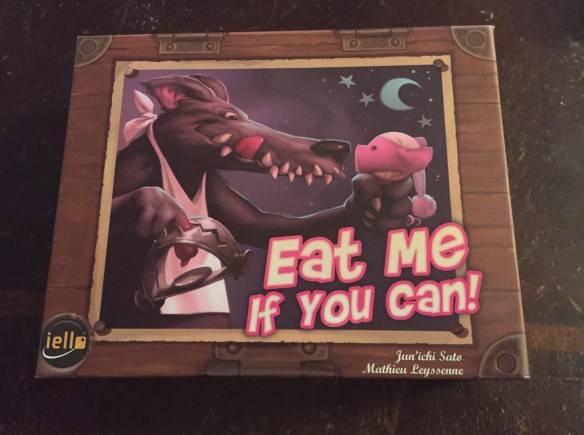
Board Game, Eat Me If You Can A smaller game with cards and tokens, this Iello game focuses on rotating rounds where players play as either the wolf, Little Red Riding Hood, the three little pigs, or the sevin young kids. When you’re the wolf you try to surprise the other players and avoid traps set by everyone else. A cute adaptation/combination of multiple children’s stories including an evil wolf, the game looks slightly more complicated than I initially anticipated, but it seems like it’s easy enough to pick up. I had heard of this game before and was interested in playing, so it’s a great addition to my collection.

IMG_2823

Card Game, Timeline: Historical Events A card game based on historical events, timeline focuses on playing historical cards in order from your hand until you use up all of your cards. If you play a card in the wrong order, you have to draw another one from the pile. Getting the correct timeline becomes more difficult as cards are played out. I’m not much of a history buff, but I’ll admit I’m intrigued with this game. I feel like depending on the cards in your hand it could be really easy or really difficult. For example, one of the cards is “Fall of the Berlin Wall” and another card is “The invention of Chinese Calligraphy”. I plan on trying this game out with some of my history buff friends soon.

Mini Game, Bus: Transit Demands ItNow this game is the most intriguing to me- the size of the game is smaller than a stack of gum,IMG_2821 but inside there are 30 road cards that create a fairly engaging game IMG_2822when spread out.  Created by a company called Perplext, Bus focused on players navigating b
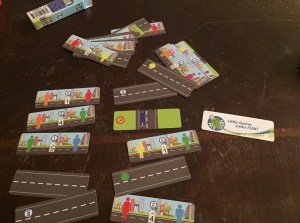

us routes based on randomly laid out roads. After the road is created, each player then chooses what they think is the most efficient route to pick up passengers without driving too far to earn points. The fact that I can fit the game in my pocket is certainly appealing. I plan on taking this game on road trips in the future.

Overall I have enjoyed both boxes that I received from Tabletop Monthly. I like the games from the Family box more, but the expansions and accessories from the Hardcore box are cool value-adds to the box. I think that you can enjoy subscribing to both depending on your preferences with games. Ultimately it’s a fun way to increase your game collection without breaking the bank, as well as potentially being a good gift idea for board game enthusiast friends.

Why the Internet has revitalized Board Games

http://www.boardgamegeek.com With the ever-changing technology that is the Internet, it’s no surprise how much it affects everything in our lives. This blog is just as much proof of that as anything; I can reach other board game enthusiasts from around the world in the comfort of my own home. As Bill Gates once said, “The Internet is becoming the town square for the global village of tomorrow.” So with this evolving landscape that the whole world is shaping, it’s no surprise that it is a force that influences the board game industry as well. What is surprising is that rather than diminishing the value of the board game, the Internet has actually helped improve the board game industry.

It seems sort of contradictory in a way; after all, board games are considered outdated by many people, so how has technology revitalized something so archaic? There are four major factors revolving around Internet usage that have helped the board game industry improve over the years: online purchasing, media and communication, online gameplay, and greater access to funding.

Online purchasing- the most obvious of the advantages of the Internet, being able to purchase a game online is making it exponentially easier to find all types of board games. Board game shops are becoming less common, and superstores such as Target and Wal-Mart have a limited supply of tabletop games in stock. In contrast, there are hundreds of online board game stores out there and ready to be used. Whether you buy online directly through a manufacturer, through a third party, or off of a secondhand/used game site, the ability to buy games online provides easy access to a desired commodity.

Media and Communication- Whether it’s through blogs, articles, or social media sites like Facebook and Twitter, online communication helps spread awareness of board games and allows for easier access to reviews and opinions about specific bgggames. The best example of this is the website www.boardgamegeek.com which has data on thousands of different games and includes a forum to ask questions to other board game lovers. Unlike TV where it is a one-sided conversation, the Internet gives game publishers a chance to advertise games and also allows customers to enjoy an open dialogue.

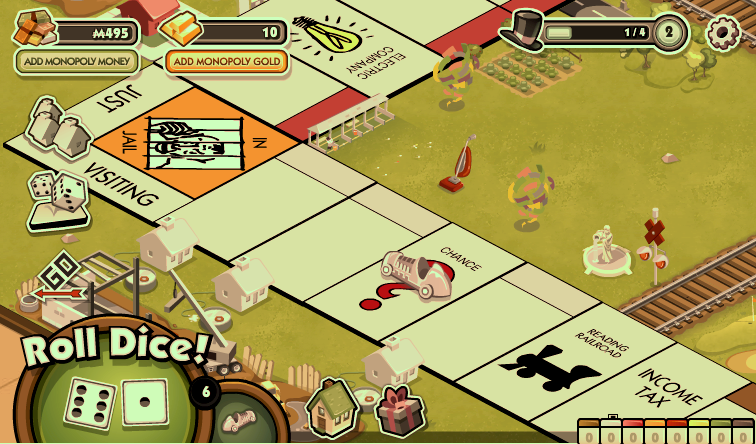
Online Gameplay- As I said before, board games can be considered archaic at times in comparison to video games or other types of games. So what’s a good way to make boar games more modern? Put them online to play! You can find games like Uno, Monopoly, Scrabble, and Risk online through various means. Flash games on Facebook also are a part of the craze, with games like Words With Friends and Trivia Crack channeling aspects of the popular board games on the market into an online equivalent to a board game.online monopoly

Greater Access to Funding- Let’s say you have an amazing idea for a board game, but can’t get a publisher to fund the game and don’t have enough money to start it yourself. What do you dokickstarter-logo? In the past you would have to take out a loan and risk your financial future for the chance of the game taking off. But now there’s a better way, and that way is the Internet. Advertising for funding from strangers may seem like an unlikely prospect, but it has started to take off in a way nobody would expect. www.kickstarter.com is the premier site for funding these kinds of projects, and there is an entire section of the site dedicated to tabletop gaming. Some notable board games funded by Kickstarter campaigns include Exploding Kittens, Scythe, and Zombicide: Black Plague. The fact that you can work for your game to be funded by people on the Internet is a huge boost to game designers all over the world.

The Internet took the world by storm, so sometimes it’s difficult to remember how new it really is. Board games have been around forever and the Internet is still just beginning. The fact that board games have not simply faded into the shadows, but rather took advantage of the new technology, says a lot about the industry and what it is working towards. If we’re lucky, board games will continue to grow and evolve while still keeping the aspects that we all love about them intact.

Top 10 Card Games for Parties/Large Groups

I can’t emphasize enough that one of the best things about board games is the social aspect. A vast majority of board games have at least 3-4 players; interacting with friends and family is a big part of the tabletop game. Card games tend to amplify this effect, with many card games exceeding the 3-4 player average and allowing for large numbers of people to enjoy. Because of this, card games have more appeal for parties and large groups. The most obvious examples of this are the games Apples to Apples/Cards Against Humanity, both of which are extremely popular at large gatherings because they are easy to transport and can be played by almost an unlimited number of players.

Whether the group is there for a party where you play games over a few cocktails or a family reunion where cousins and grandparents gather to catch up and have some fun, card games are good at bringing large groups together. So what are the best card games for these kinds of events? Obviously you need games that allow for large numbers of players or the ability to play in teams. In addition, you’ll want a game that you can play but also talk and be sociable, meaning the game should be relatively simple to play. There are plenty of games that meet these requirements and a lot of them are engaging and entertaining. Below are my top ten card games that you should play in group settings:

Cards Against Humanity

  • Published 2009
  • # of players 4-30

The most obvious choice for a party game, Cards Against Humanity is extremely popular due to its clever/vulgar humor and ease of play. As strange as it sounds, the fact that the game allows you to be obscene and dirty-minded somehow adds to its charm. The game itself is simple enough; you have a judge that draws a fill-in-the-blank card that each player anonymously answers with his or her own card. The judge then picks the best/funniest response, and the person who played that card wins the round. Best to be brought out when the kids are in bed, the game is a mainstay for young adult parties and group nights (which may or may not contain alcohol).

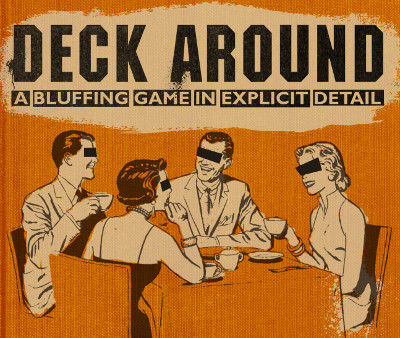
Deck Around

  • Published 2014Deck Around
  • # of players 3-20

One of the newer games out there, Deck Around takes Urban Dictionary and turns it into a card game (for those of you who don’t know what Urban Dictionary is… you probably don’t want to). The object of the game is to take a word or phrase on a card and make up a definition that you anonymously provide to the rest of the group, along with the real definition. Everyone then chooses what he/she thinks the correct definition is and if your definition is picked you win the points. This game is another great option for the dirty-minded who want to make some less-than-PG jokes. Enjoy learning all about what a Boston Blowfish is!

Mad Gab

  • Published 1996
  • # of players 2-12 (can be played in groups)

A wordplay game where you work in groups, Mad Gab takes a well-known phrase and changes itMad Grab to a string of unrelated words that, when said aloud, sound similar to the original phrase. The object is to read through the sentence until the team guesses the correct phrase. The entertainment comes in people almost saying the phrase, and the other team that knows the phrase laughing at the difficulty of it. Great for families and friends, you can either play with a timer of just go back and forth between teams trying to guess. You’ll have a great time either way.

Pit

  • Published 1903
  • # of players 3-8

A fast-paced and loud game, be careful when and where you decide to play Pit. Each player is dealt a hand of commodity cards (wheat, barley, etc.) and the objective is to trade resources until you corner the market of one resource. You can’t show the cards that you’re trading, so instead you try and trade with someone based on the number of cards. This normally devolves into everyone yelling the number of cards they want to trade (Trade 2! Trade 3! Trade 4!) and then when you have all of the cards you slam the middle of the table and call “corner on _______!” Your voice will be hoarse by the end of the game, but it’s definitely worth it.

Say Anything

  • Published 2008
  • # of players 3-8 (can be played in groups)

Say Anything focuses on a series of questions where each person writes down his or her answer and a judge decides which answer is best. To add to the competition, each player (or team) has chips that they can wager on any answer, including their own, and if the judge chooses that answer they will win points as well. You can play your tokens on multiple phrases, or you can bet it all on one. The game helps start a lot of dialogue and is a good way to start a party with a group of friends.

Set

  • Published 1988
  • # of players 1-20

One of my favorite games when I was a kid, Set is all about finding sets of 3 cards that either have the same or opposite characteristics (all the same shape or all different shapes, the same number of shapSet cardes or 1 2 and 3 of each shape, etc.) and then call “Set!” as soon as possible. After you find a set, new cards are added and the process continues. The person with the most sets by the end of the game wins. This game is one that makes you think and is great for younger kids to learn patterns and think quickly.

Taboo

  • Published 1989
  • # of players 4-10

One of the most well known games from the 90’s, Taboo is a group game all about hinting at keywords which the rest of your team has to guess. There are also Taboo words that you can’t say when you try and get other players to guess. The more keywords guessed, the more points you receive. A simple concept with a fun twist, Taboo is an entertaining game that is good at getting a larger group engaged in conversation.

The Game of Things…

  • Published 2002
  • # of players 4-15

The game Things… focuses on specific phrases such as Things… you shouldn’t put in your mouth, or questions similar to that (yes, a lot of them can be interpreted as dirty). One person acts as judge, and everyone else answers the phrase anonymously. Rather than voting on your favorite answer, the Judge chooses who they think answered the question. If he/she gets it right, they continue to guess until they get one wrong, and then the person to the judge’s left guesses until all phrases have been correctly guessed. This game is better the more players there are, so make sure you have a big group when you play.Things...cards

Uno

  • Published 1971
  • # of players 2-10

Another classic card game, Uno is one of those games that you will always enjoy playing even if you didn’t necessarily think of it first when you go to your game pile. A casual game that you can sit and play with any group, Uno is one of the universal party games that has been in households for years.

Utter Nonsense!

  • Published 2015
  • # of players 4-20

Utter Nonsense is a newer card game based on saying odd phrases in funny accents. Another “adult” game, Utter Nonsense has a silly humor about it that shows it doesn’t take itself too seriously. Similar to Cards Against Humanity, there is a different judge each round that draws an “accent” card to start off the round. Each other player then chooses one of his or her phrase cards and says the phrase in the accent that was played. These accents vary from normal ones like “Irish” to silly ones like “Valley Girl”. A bit hit or miss when it comes to the phrases, this is one of the games I encourage after you’ve had a few drinks (but it’s plenty of fun without drinks to).

Board Game of the Week- Exploding Kittens

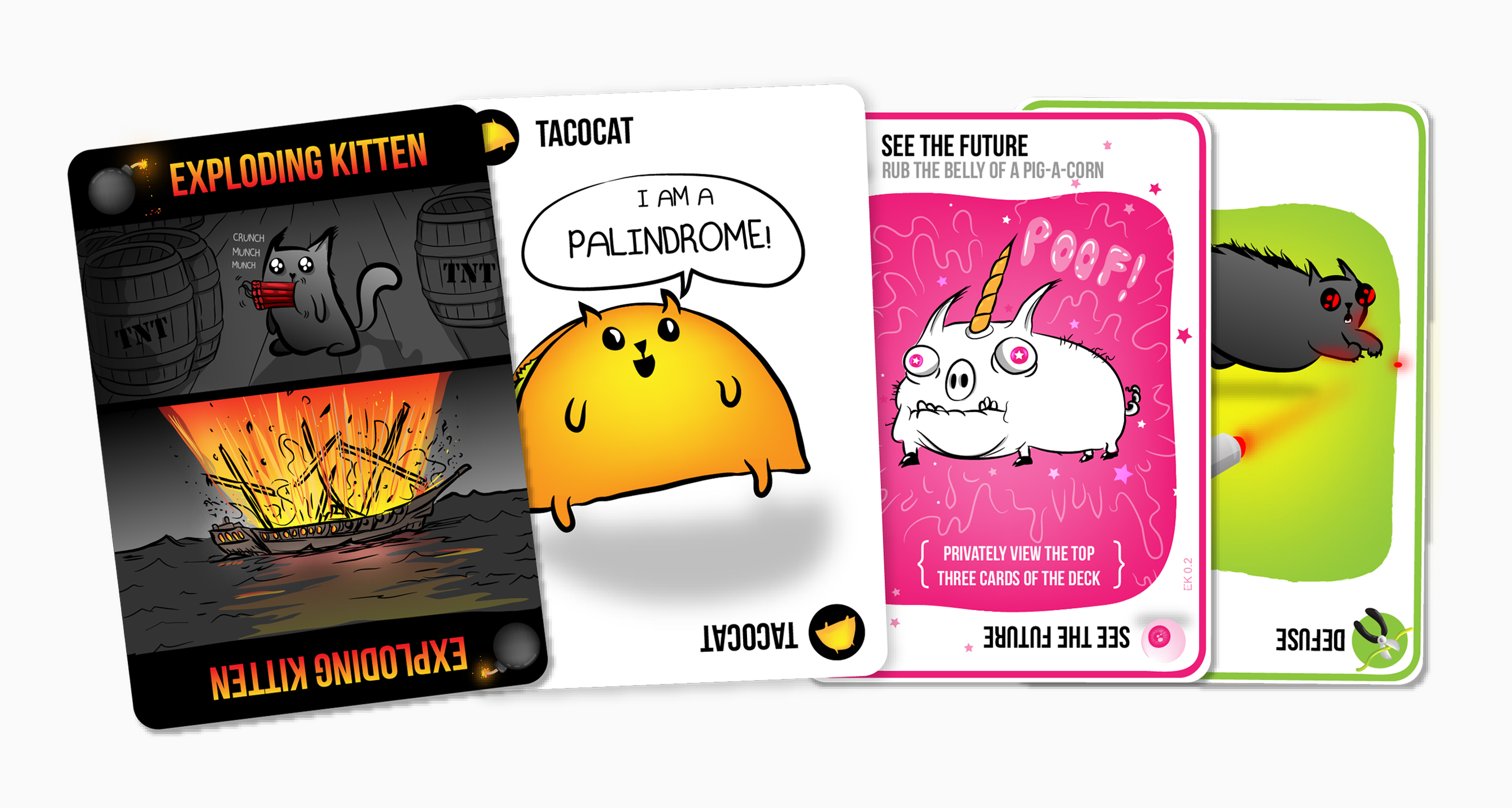
Exploding KittensGame Title: Exploding Kittens

Release Date: 2015

Number of Players: 2-5 (4 is recommended number)

Average Game Time: 15 minutes

Game Publisher: Self-Published

Game Designer: Matthew Inman, Elan Lee, Shane Small

Expansions/Alternates: No

Available in Stores: Yes

Age Restriction: 30 and up? (In all honesty, probably not suited for anyone under 18)


Holy crap guys, this game. Where do I begin to explain the insanity that is Exploding Kittens? Created and published by 3 clever (and somewhat twisted) individuals, Exploding Kittens found an extremely high level of success early in its Exploding Kittens Boxdevelopment through an aggressive Kickstarter campaign. When it was first created, Matthew Inman (creator of The Oatmeal comics), Elan Lee (Game designer for Xbox/ARGs), and Shane Small (Xbox/Marvel game designer) all got into a room and had a conversation that I pretty much assume went exactly like this:


Inman: OK guys, we need to create the most ridiculous game concept in the history of mankind so I can have an excuse to draw a cat shaped like a taco. What are your thoughts?

[pause for dramatic effect]

Lee: I’ve got it! A game where we draw a bunch of funny versions of cats… that EXPLODE!

Small: Brilliant! And we should totally add back hair, unicorn enchiladas, worm holes, and goats into the mix!

Inman: Whoa, hold on guys. This idea… NEEDS MORE LASER BEAMS!

All: YES!!!


That’s what I think happened, and if you tell me it went any other way I won’t believe you.

Now to get into the gamKitty-Powered Russion Rouletteeplay itself; you can pick up this game and be a master at it within about 5 minutes. The concept at its core is a card game equivalent to Russian Roulette, with some added twists and strategies to make the game more interesting. You draw and play cards until you draw an exploding kitten card, and unless you have a defuse card (you get 1 at the beginning of the game and more are added to the deck) you lose the game and are “out”. The last player standing is the winner.

I think it’s safe to say that the best quality this game has is its humor. Just check out this YouTube video to show how ridiculous and entertaining the creators and the game both are:

https://m.youtube.com/watch?v=hS0Q-KbCsp0

There was a lot of creativity, randomness, and art all thrown together and added into a deck of cards. It ends up being a very fun game that makes you laugh almost constantly as you play, especially for the first time. The gameplay is simple but gets exciting as the game gets closer to the end, and even losing early isn’t so bad because you can watch events unfold quickly from the sidelines.

Replay value is moderate; you will want to play the game multiple times when you first get it, but it will probably be a game you will play in bursts. Once you’ve read all of the cards and laughed at their wit and humor, it won’t be the same game experience until you take a break from the game for a while. In addition, the simplicity is great for first time players but also makes the game less captivating after a few playthroughs.

Ultimately games are supposed to capture your attention, bring you and your friends together, and be fun. Exploding Kittens does all three of these things and does them well. I highly recommend this game as a fun alternative to actual Russian Roulette, which I hear is not the best way to spend an evening (citation needed).

Jack’s Rating: 4/5 stars

Card Games and Card/Board Game Hybrids

games_cards

This week I’m going to be focusing on a very specific type of game for all of my posts; I’ll be writing about card games and how they fit into the board game world. Now when most people think of card games, their mind probably jumps to games like Magic: the Gathering, Duel Monsters, or maybe even Pokémon. These are great games that have their own place in the entertainment industry, but the card games I’m talking about are unique. These card games play and look like a board game in a lot of ways, and sometimes end up being thrown into the same category as “board game”. A lot of card games even take this a step further and add pieces and boards that add to the visual effects of the game, making the difference between a card game and a board game even murkier.

Duck of DoomFor the purpose of this conversation I will consider a card game a game that plays like a board game but the majority of action is based on playing the cards rather than moving on a board. A good example of this type of game is Munchkin, a D&D based card game which uses different monster, treasure, and event cards to progress the game and utilizes a board simply keep score (in the original version of the game there wasn’t even a board, you just kept score by hand). This type of game is focused on the cards and the effects they have on the game. In contrast, a game like Clue puts as much emphasis into moving around the board and going into specific rooms as it does the cards that you use to determine who the murderer is. For additional examples of these different types of games, check out the chart below:

Type of Game Game Description Game Examples
Board Game with Cards Focuses on moving across board rather than playing cards Clue, Ticket to Ride, Settlers of Catan
Card Game/Board Game Hybrid Uses a board to facilitate the game, but majority of focus is on playing cards Munchkin, Taboo, Trivial Pursuit
Card Game No board is used, solely focused on the cards Cards Against Humanity, Exploding Kittens, Uno

So now that we’ve established the types of game we’re talking about, what are the advantages of playing a card game versus a board game? Here are a few reasons these games are worth playing:

  • Less restriction to a particular area or movement: Board games generally have a defined space in which you can move and react with your character or piece (with certain exceptions). While there are advantages to having a set area to move about, an advantage to playing a card game is that there isn’t the same restriction. Whether this means that you have more freedom within the game itself to play your cards, or if it means you can all gather around and play on the floor, the flexibility of card games is a definite advantage to playing them.
  • More opportunities for artwork and impressive images: Some of the most fun parts of a game are the aesthetics. Artwork is a huge portion of making a good game great, and card games have the ability to amplify this effect. Because there are so many different cards you can play in the average card game, artists have more of a chance to be creative and come up with great ideas. The best card games out there usually have cards with either beautiful or entertaining pictures on them.Exploding Kittens Cards
  • Similar style/feel of children’s games: When you look back at some of the games you played as a kid, it’s surprising how many of them involved a deck of cards. Games like Go Fish, War, and Cheat were common when my friends were stuck somewhere with nothing to entertain ourselves except a deck of cards. Playing a newer card game always brings me back to those times, and that excitement quickly translates into a fun experience for everyone.
  • Easy to Transport: Generally speaking, it is easier to pack a card game than it is to pack a board game. This is not always the case, but more often than not on road trips the card game is the one that will be easier to fit inside your suitcase. Bringing along some fun card games on trips can mean the difference between an entertaining evening of games and a few hours of trying to find something good on the hotel TV.

Plutomium Dragon

Ultimately card games and card/board game hybrids have many of the advantages of regular board games, with some added bonuses along the way. Similar to the board game industry, these types of games are only getting bigger and more common. Make sure to keep an eye out for some cool new card games next time you get a chance and I promise that you won’t be disappointed.


If you have any card games you are a big fan of or would like to know more about, comment below and tell me about them!