My Top 5 Board Game Publishers

There are two essential groups when it comes to creating a popular board game; designers and publishers. The designer comes up with the concept and fleshes it out into a board game. The publisher brings that idea to life and produces it/distributes it to the masses. Both groups need each other and form a symbiotic relationship, and when a game succeeds it is due to the hard work of the person who created the game and the company that gave it a chance. Because of how important these two groups are, I thought it would be a good idea to highlight some of the best designers and publishers currently in the market today.

Now, there are hundreds of board game publishers and even more designers, so this will by no means be a comprehensive list. These are just a list of some of my favorite designers/publishers currently working in the board game space. Let’s start with Publishers; my top 5 publishers in alphabetical order are below.

Days of Wonder

days of wonder

  • Best Known Game: Ticket to Ride
  • Other Popular Games: Memoir ’44, Five Tribes, Small World
  • My Favorite Game: Ticket to Ride

“Days of Wonder® develops and publishes games that Play different. From its insistence on releasing only a very limited number of new games, to its uncompromising board game production values and unique in-house digital development team, Days of Wonder consistently raises the bar with an unmatched string of hits that includes Ticket to Ride®, the world’s best-selling train game; Small World®, the legendary fantasy game of epic conquests; and Memoir ’44®, the World War II saga with 20 expansions to its credit.”-Days of Wonder About Us

Founded in 2002, Days of Wonder currently holds the record for the youngest gaming company to have a game that won the Spiel de Jahres Game of the Year award (Ticket to Ride, 2004). Their list of games is smaller than most because they focus on creating and selling high-quality products rather then mass distribution. They have also begun to dabble in online gaming, with new game apps and Steam games becoming available via their website. One of the better board game companies that might not have as large a collection as others on this list, provides entertaining and clever games across the board (pun intended).

HasbroHasbro Logo

  • Best Known Game: Monopoly
  • Other Popular Games: Twister, Jenga, Risk
  • My Favorite Game: Tie (Monopoly and Risk)

“Hasbro is a global company committed to Creating the World’s Best Play Experiences, by leveraging its beloved brands, including Littlest Pet Shop, Magic: The Gathering, Monopoly, My Little Pony, Nerf, Play-Doh and Transformers and premier partner brands. From toys and games to television programming, motion pictures, digital gaming and a comprehensive lifestyle licensing program, Hasbro fulfills the fundamental need for play and connection for children and families around the world. “- Hasbro Corporate Statement

Hasbro is the board game publisher that most people will know about. Hasbro is one of the largest game companies currently in existence; you can find their games pretty much everywhere. Most of the classic popular board games come from this company, such as Monopoly, Risk, etc. While board games are not the only thing Hasbro does, the tabletop industry will always be a large part of their portfolio. Currently the company’s major success with games is in selling their large collection of popular games to new generations.

Iello Gamesiello-logo

  • Best Known Game: King of Tokyo/King of New York
  • Other Popular Games: King of New York, Dungeon Fighter, Heroes of Normandie
  • My Favorite Game: King of Tokyo

“We specialize in games that are rich with graphics, beautiful in design, and innovative in game play. We are now a premier publisher and worldwide distributor in a fast-expanding industry. In 2012, we solidified our position by creating a U.S. division to better service the American market. This, coupled with the release of Richard Garfield’s best-selling and award-winning game King of Tokyo in 2011, put us in the forefront of international game companies.”- IELLO About Us

One of the newer board games publishers in the industry, Iello started off as a Distributor but changed course to become a publisher back in 2008. Located in France, they have become a popular publisher in America through some of their premier board game titles. Most well-known for the game series King of Tokyo, they are one of the up-and-coming game companies as they continue to expand. Their board games are all very aesthetic, with some of the best board game artwork in the last few decades of board game development.

Mayfair Gamesmayfair-games-logo_xerbm5

  • Best Known Game: Settlers of Catan
  • Other Popular Games: World Without End, King Chocolate, Extra! Extra!
  • My Favorite Game: Settlers of Catan: Seafarer’s Expansion

“Mayfair Games is a U.S. based Illinois company, incorporated in 1981 and is an international publisher of board games and card games suitable for families and hobbyists. Mayfair Games has over 100 game titles in print including many long-running series of games such as Empire Builder™ and The Settlers of Catan™ as well as many long-running standalone titles such as Alibi™ and Family Business™. Mayfair Games, making the ‘games of our generation’.”- About Mayfair Games

It’s impossible to create a list of influential board game publishers without mentioning the company that brought us Settlers of Catan.  Mayfair Games focuses on bringing European-style games to the American market, and provides numerous different types of games with over 100 games and expansions in distribution. Creating the many expansions of Settler of Catan and other popular games has also ensured Mayfair stays relevant in an ever-changing industry.

Z-Man Gamesz-man games

  • Best Known Game: Carcassonne
  • Other Popular Games: Pandemic, Shadowfist, Tales of the Arabian Nights
  • My Favorite Game: Pandemic

“Z-Man Games, Inc. is a game publisher. New Yorker Zev Shlasinger created the company in 1999 for the sole purpose of bringing back Shadowfist, one of the best multiplayer Collectable Card Games ever made. With the success of Shadowfist, Z-Man Games published its first B-Movie card game, Grave Robbers from Outer Space, and from that point on Z-Man Games decided to continue making fun, innovative games. Since that time we have published over 100 games including award-winning games, such as Agricola, Pandemic, and Merchants & Marauders – to name a few.”-   Z-Man Games About Us

Z-Man games found success by taking lesser-known games and expanding them into the gamer community, along with creating a wide variety of different games for purchase. Carcassonne, while not being the most well-known game in comparison to Monopoly or Settlers of Catan, is critically acclaimed to be one of the best board games currently in production. Many of their games have won awards and have gone on to become very popular in America as well as internationally.

If there are any other publishers you think deserve to be on this list, comment on this post to let me know!   

Board Game of the Week – Pandemic

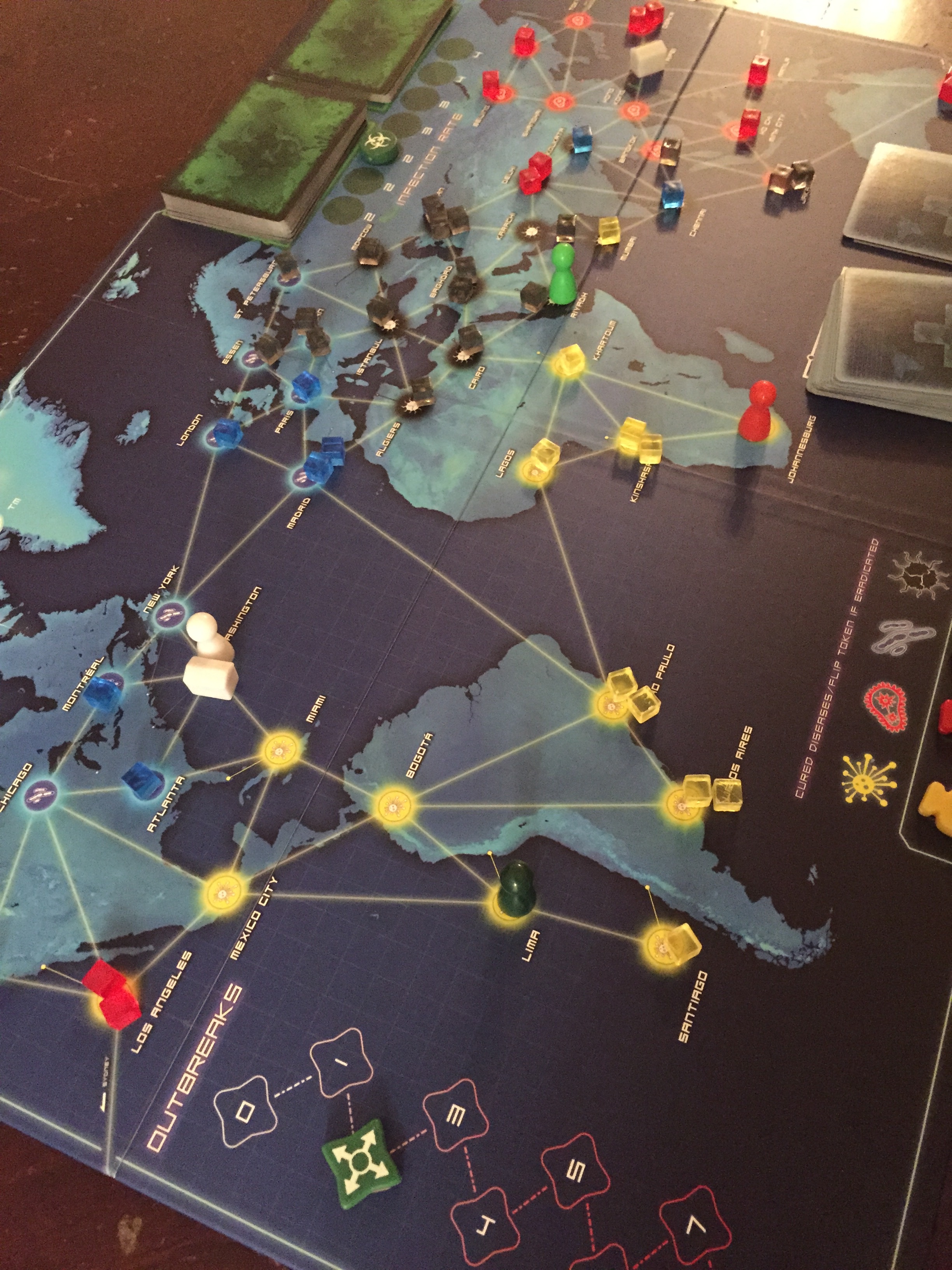
Pandemic 5   This week, I am reviewing the critically acclaimed Matt Leacock original Pandemic. With multiple different awards from well-known game industries such as Board Game Geek and Boardgames Australia, Pandemic focuses on working as a team to stop a series of virus outbreaks from eradicating all of mankind.

Game Title: Pandemic

Release Date: 2007

Number of Players: 2-4 (4 recommended)

Average Game Time: 45 minutes

Game Publisher: Z-Man Games

Website: http://zmangames.com/product-details.php?id=1246

Game Designer: Matt Leacock

Expansions/Alternates: Yes

Available in Stores: Yes

There aren’t many board games out there that ask you to combine forces against the game itself. A lot of the fun of playing games is playing against friends and family so that when you win, you can claim superiority over them (at least that’s what I enjoy about it). Still, there are a few games out there that find a way to create some form of villain or obstacle, and the object of the game is to join forces and defeat it as a group.Pandemic 4 One of the games that does this best is Pandemic, where you have to communicate and work as a team to claim victory as a single unit.

The object of this game is to stop virus outbreaks from infecting the entire world and finding cures so that you can eradicate the virus from the planet. No pressure, right? You travel around a map of the world and try to contain the 4 different viruses currently infecting the cities around the globe. The more the virus spreads, the harder it is to contain it. While you work to contain the virus, your team will also be focused on finding a cure. If you are able to cure all four viruses within the allotted time, you win. If you take too long or allow enough “outbreaks”, you lose. There are a number of other factors involved with the game, including research stations to contain outbreaks and look up cures, Epidemic cards that when drawn add more of the virus across the board, and numerous different types of event cards that bring a level of complexity and variety to the game.

Pandemic 3By far the most appealing thing about this game is that it allows you to work as a unit, but keep an individual identity during the game. Each player starts off with a specific “role”. There are seven roles you can play in any given game, and each one of them has a specific skill that can be used to improve your odds at winning. For example, the player with the Dispatcher role is able to move the other players’ pawns across the board easily, while the medic is better than the other players at stalling outbreaks. A huge part of the game is working together in order to use your role’s strengths. The more you’re able to help each other, the easier it is to complete your objectives.

The game is definitely complex, not so much in how to play but rather in the strategy and decision-making that goes into a successful game. The more you know about the game the more fun it is, because you can try a number of different strategies and work with your team members to win. Replay value for this game is high, especially since you learn more as you go and get better at playing at harder difficulties. The only real flaw in the game is the beginning; learning how to play and the best way to use your role takes effort so it can be confusing to people playing for the first time. I definitely recommend for your first play-through trying to play the game with someone who has played before rather than having a group of people with no experience. Having someone who knows the game takes some of the pressure off since they know how the roles work and the best ways to win.

Overall this game is a nice change of pace from the traditional competitive games, and the art and game play are big positives. The rules are fairly complicated and game-play can slow from player to player, but Matt Leacock has found a way to motivate people to work together in an industry that normally pushes for competition against each other. Be prepared to do a lot of critical thinking and scheming with the other players to claim victory against the ultimate Pandemic.

Jack’s Rating: 4/5 stars. pic1534148

Old School versus New School board games

Old School vs. New School comment below

As a 24-year-old, many people have told me that I’m now considered a “responsible adult.” What this means to me is that I pay my own bills, do my own laundry, deal with any issues that come up in my life, and, most importantly, talk about how older stuff is way better than newer stuff. While I begrudgingly deal with the first three parts of adulthood, there is something to be said about the era so eloquently dubbed as “the old school”; it’s got some pretty cool stuff. Board games are a great example of that. Classic games like Monopoly, Trivial Pursuit, and Yahtzee are some of the most fun games you can play. Families in particular like playing older games because it’s a good way to bond with older relatives and spend a brief moment in time learning about and understanding the past. Nostalgia runs rampant for me whenever I pull out the Game of Life, which my Dad emphatically dubbed “The Game of Death” after losing to me time and time again. These games were extremely important to my development as a child, so they will always hold a special place in my heart.

All that being said, older games aren’t the only ones with merit. As amazing as the classics are to play, there really is something special about trying out a new board game for the first time. It’s youth personified: the joy of unwrapping the game, learning the rules, and trying to get every advantage you can to win against your friends. And there’s no doubt about it, popular new games are extremely inventive and have an extremely high replay value. I’m confident that in 50+ years, games like Kings of New York and Quirkle will be just as engaging as they are now. The reason that board games are being revitalized isn’t just about the people, or the era we live in; it’s also the new board games and how impressive they have become. Ultimately I have to credit this blog to new board games, because if they didn’t hit the scene I honestly believe that there would significantly less interest in these types of games.

So do I prefer the old school or the new school? My best response to that is “ask me when I’m older.” Because right now, I can’t consider myself a true board game enthusiast without having both types of games at my disposal. Is that a cop out? Probably. Do I expect this opinion to change any time soon? Probably not. But it’s pointless for me to sit here and say that I like one game type more than the other because I like all of them so much. So when you’re sitting down for board game night with whomever you spend your evenings, whether you’re playing Risk or Myth, Sorry or Munchkin, Scrabble or Bananagrams, the year the game was made doesn’t matter. All that matters is that you enjoy it in the present.

So because I’m stuck on the fence, I’m going to let you all decide! Leave a comment below about which types of board game you prefer.

The start of it all- Settlers of Catan

yes we catan

I remember the first time I played the game Settlers of Catan. I was at my neighbor’s house and I sat down with my friend Kristina and her family to play. They proceeded to explain the rules of the game for the next 15 minutes and I nodded politely while not understanding anything they said. It took a while to get the hang of it, and even when I was playing the game I felt like I didn’t fully get all of the rules and strategy, but I ended up winning the game and then immediately going home and telling my parents we needed to buy a copy. Looking back on it, part of me has to wonder why the game caught my attention the way it did.

What is it about Settlers of Catan that makes people excited about board games? At first glance, this instant classic isn’t the type of game you would expect to completely revitalize the board game industry. Now I’m definitely not saying that Settlers is a bad game; it’s one of my all-time favorite board games, and I’ve taught many of my friends how to play with great success. But Settlers isn’t exactly the simplest game to pick up. It can be difficult to learn and the game starts off slowly while you build up resources, so in today’s fast-paced society the assumption is that nobody would have the time or attention span to learn something so complex. This game defies the stereotype of what we’re supposed to want, and yet against all odds it’s brought about a youth movement for tabletop gaming.

Personally I believe that Settlers is the type of game that is built for longevity. It has a compelling style and look that pulls you in, excellent gameplay and a strong social factor to keep you engaged, and an ever-changing layout to keep you coming back for more. Games last about an hour so you have enough time to learn the game and still get engrossed in fields of wheat and mountains of ore while you try and outmaneuver your opponents. Pretty soon you are buying the game (and its many expansions) and teaching your friends how to play, and the cycle continues.

Back in 1995, Klaus Teuber created a game that would change everything. Before Settlers, the only well known board games were older games like Clue and Monopoly that, while fun, have become more classic than groundbreaking. Settlers changed that. The game is complex, colorful and different every single time, and it spurred a new renaissance of board games that ultimately led to more popularity than ever before. The board game industry has begun to thrive, and a large part of that is thanks to Settlers of Catan. Sometimes it’s hard to see, but change can come from anywhere, including from the simple act of sitting down with your neighbors to try something new.

For more information on Settlers of Catan and all the different games and expansions, go to http://www.catan.com

Board Game of the Week – Ticket to Ride

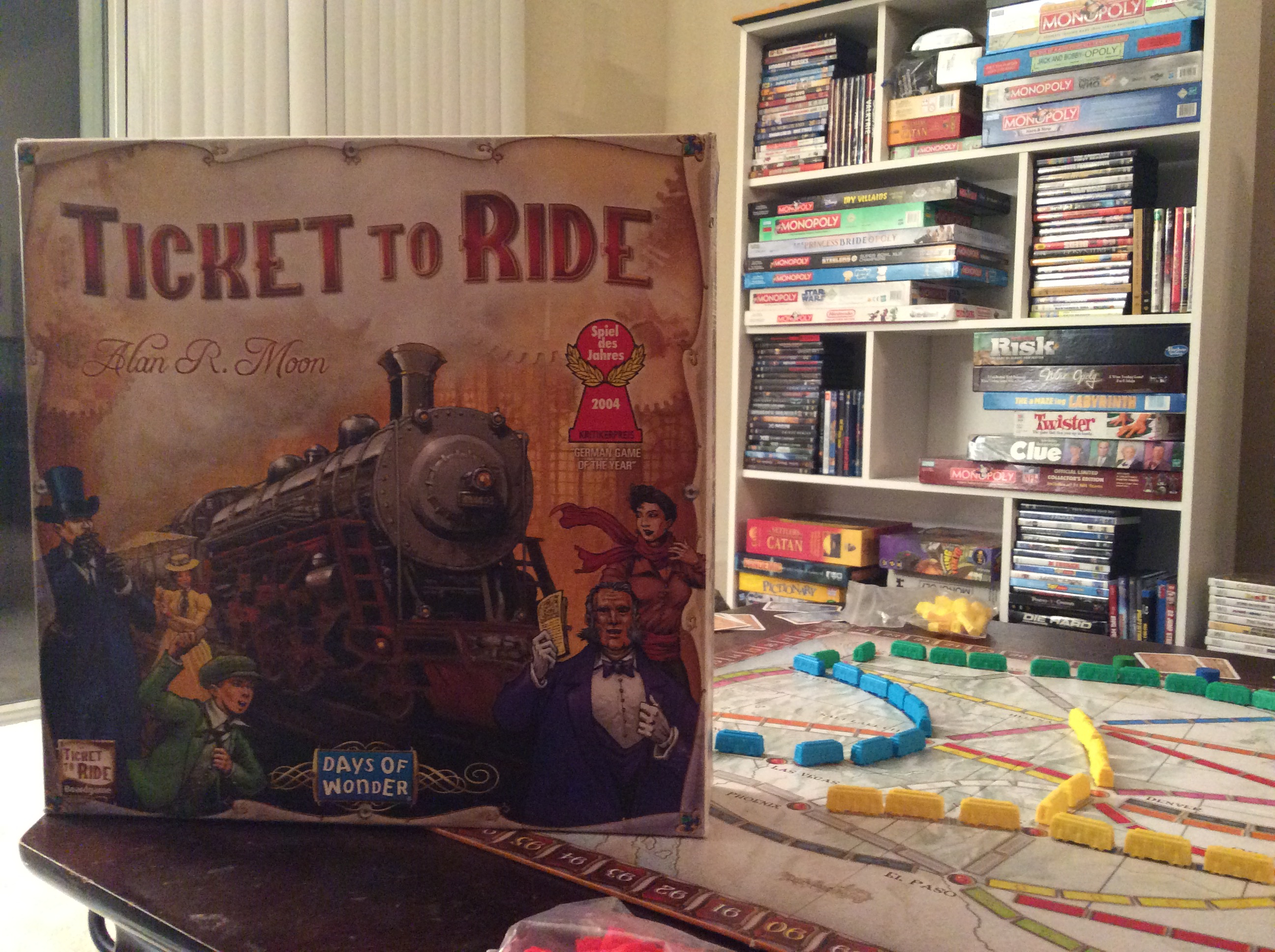
Each week, I’m going to review a board game that I’ve played and post the full scoop. This week, I’m going to talk about the Days of Wonder hit Ticket to Ride.

Ticket to Ride picture 3

First, the basic details:

Game Title: Ticket to Ride

Release Date: 2004

Number of Players: 2-5

Average Game Time: 30 minutes-60 minutes

Game Publisher: Days of Wonder

Game Designer: Alan R. Moon

Expansions/Alternates: Yes

Available in Stores: Original version yes, alternates and expansions online

Ticket to Ride picture 1

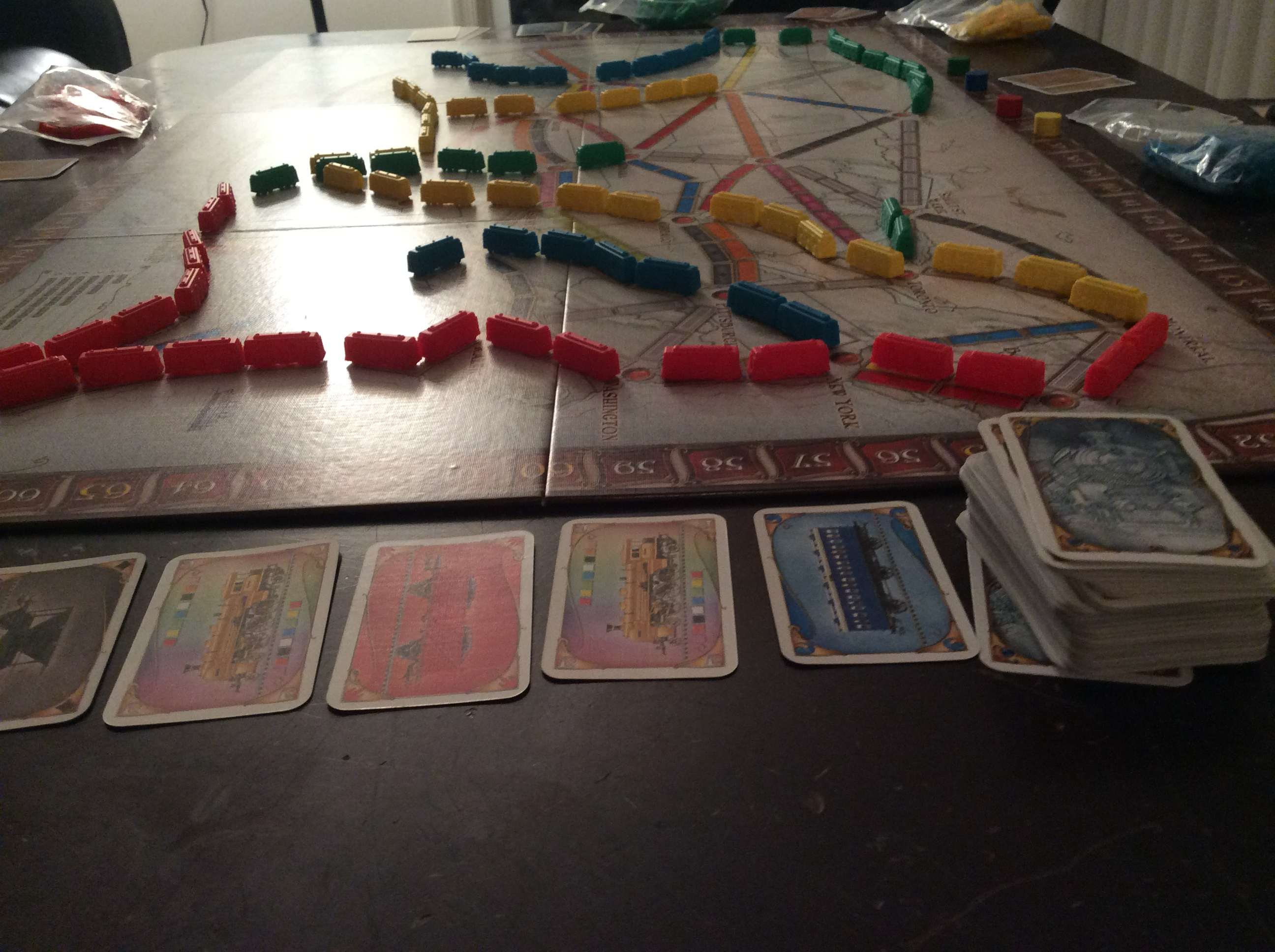
Ticket to Ride is a game with a simple concept that involves 2-5 players trying to expand their railroads across the United States (or Europe or the Nordic counties if you play the alternate games). The object is to create railroad paths from city to city to earn points based on “Destination Tickets” acquired throughout the course of the game. Once a player has used up all of his or her train cars, each player has one more turn to complete his or her tickets. If a player doesn’t complete the tickets, he or she loses the points normally awarded for finishing the paths.

Ticket to Ride picture 2

I think the main appeal of this game is that it’s fast-paced but still requires a lot of strategy. Players can only complete one of three options each turn, and each turn goes by quickly so nobody sits around waiting for long. The strategy of where you place your train cars is extremely important; you can choose to either take direct routes from city to city or take an extremely long route to get to multiple destinations in one go. You can also block other players from getting to certain cities, denying them points they would need to win. Replay value is high because strategies and routes change, though it isn’t a game that you should plan on playing more than two or three times in one sitting.

Overall, I highly recommend this game for a small group with an hour or so to kill. Families will enjoy it, as well as groups of friends who are competitive and willing to give something new a try.

Jack’s Rating: 4.5/5 stars