In Defense of Monopoly

Monopoly Boards

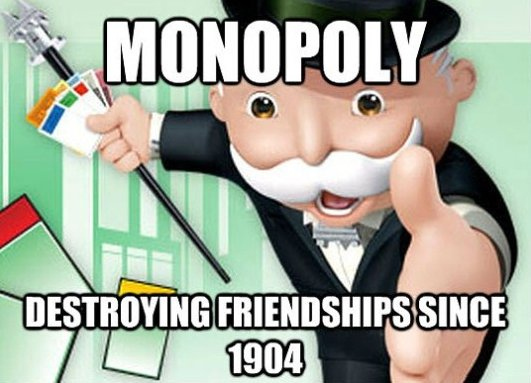
I can’t tell you how many people I know that have a burning hatred towards Monopoly. It honestly surprises me that whenever someone sees my Monopoly board collection for the first time, they almost always talk about what an annoying/long/tiresome game it is. Sure, the average game of Monopoly can definitely take longer than other board games, but it’s no longer than Risk, Axis and Allies, or even Munchkin. And yet of all of the games that are on the market today, Monopoly is one of the most successful and long-lasting but also one of the most criticized. Any time I browse the Internet I randomly see memes or pictures like this sprinkled around:
monopoly ruining friendships

Personally, I’ve been a fan of the game Monopoly ever since I was young. I played it with friends through high school and still play it with my roommates every once in a while when we’re all in the mood. I have 12 different Monopoly boards and have fond memories of playing all of them at different times in my life. So in honor of one of the most iconic games created in the 20th century, I’m going to explain why I believe that Monopoly is actually a great game to play and should always be a staple of your board game nights. Here are my top 5 reasons why Monopoly should be celebrated in the board game industry:

1) Easy to learn, but hard to master

One thing that can always be frustrating about board games is the time it takes to pick up on how to play. A game that is easy to learn quickly is one that will grab your attention faster and will be more likely to keep you playing, provided it stays interesting over time. When you look at Monopoly at first it may seem more complicated, but the concept is straightforward enough to pick up fairly quickly and not be far behind people who have played the game before. On the flipside of that, the game is actually surprisingly tough to master in certain ways. Sure, everyone can play the game without much strategy involved, but when you get into a group of competitors you start analyzing every move you make, every trade you attempt, every time you buy a hotel, to the point where you have to be very knowledgeable about the game itself to be an expert at it. The game allows for novices to play and have fun, but can also bring a significant amount of challenge to it when the setting is right.

2) Quick changes to the “Leader Board”

Sometimes when you play a board game, a single person will start off strong and you just won’t be able to keep up. That’s not the case when you play Monopoly- in fact, lead changes are fairly frequent once you get into the later stages of the game. Generally speaking there is a point of Monopoly where everyone has one or two monopolies and is working to build houses/hotels on them. One bad move or bad roll during this time can completely change the dynamic of the game. Someone with houses littered across the board will suddenly have to sell them all back, and maybe even mortgage or trade properties to stay afloat. Fortune can change in the blink of an eye, and while it’s true that if a player gets very unlucky and has to mortgage most of their properties he/she will most likely be stuck in that hole, the truth is that there is a lot more variety in the game standings than people give it credit for.

3) Ability to make custom rules

If you were to take out any board game you’ve played before right now, odds are high that you would know a majority of the rules of said game and you would stick to them no matter what. That’s not the case with Monopoly. Monopoly is a game with more “house-rules” than I’ve ever seen. Maybe it’s because of how long its in production, but it seems like every time I play with different people I have to be prepared for a different set of rules. Rules like free parking, mortgaging, auctioning spaces, landing on Go, and many more are all up for debate, and so before the game is started you may have to suddenly adjust to the new rules that your friends/family have put in place.

4) Teaches kids basic business lessons

I remember playing Monopoly Junior when I was a kid, and spending a lot of time counting up my money and making sure I had enough to buy a hotel or a new property. Learning the value of trading,monopoly money understanding basic math and business, and figuring out when and when not to invest are just a few of the business skills you learn from playing Monopoly. Obviously in no way does Monopoly dir
ectly translate to the business world (if it did I would be rich by now) but you can’t discount its uses in teaching youth the value of fake pink colored money.

5) Different types of boards/games

When a game has been around for over 100 years, odds are high that gaming publishers will take advantage of its popularity by creating different versions of the game. While some people find this unnecessary, I find it one of the best parts about older games. You can find a Monopoly board with pretty much any theme you can think of: Doctor Who, Legend of Zelda, Family Guy, Disney Villains, even Elvis-Opoly is a thing. For these types of games the rules don’t vary much, but the properties, cards, and pieces are all based around the theme. The aesthetics are the important part, which makes having multiple boards unnecessary but ultimately a lot of fun. In addition to the Hasbro Monopoly alternative, there are some non-affiliated third party companies that created Monopoly-esque games with similar themes but slightly different rules and procedures. Games like Wine-opoly, Princess Bride-opoly, and even Create-your-own-Opoly fit into this mold.

So the next time someone invites you to play a game with them, I hope you consider the classic business game as a potential option. Monopoly has stuck around for a reason, and that’s because it’s a fun game that people enjoy playing no matter how many jokes are made at its expense. The next few articles I’ll be writing this week are all going to be Monopoly-based, so I hope you enjoyed this one and will enjoy the others too!

Monopoly Week


Why the Internet has revitalized Board Games

http://www.boardgamegeek.com With the ever-changing technology that is the Internet, it’s no surprise how much it affects everything in our lives. This blog is just as much proof of that as anything; I can reach other board game enthusiasts from around the world in the comfort of my own home. As Bill Gates once said, “The Internet is becoming the town square for the global village of tomorrow.” So with this evolving landscape that the whole world is shaping, it’s no surprise that it is a force that influences the board game industry as well. What is surprising is that rather than diminishing the value of the board game, the Internet has actually helped improve the board game industry.

It seems sort of contradictory in a way; after all, board games are considered outdated by many people, so how has technology revitalized something so archaic? There are four major factors revolving around Internet usage that have helped the board game industry improve over the years: online purchasing, media and communication, online gameplay, and greater access to funding.

Online purchasing- the most obvious of the advantages of the Internet, being able to purchase a game online is making it exponentially easier to find all types of board games. Board game shops are becoming less common, and superstores such as Target and Wal-Mart have a limited supply of tabletop games in stock. In contrast, there are hundreds of online board game stores out there and ready to be used. Whether you buy online directly through a manufacturer, through a third party, or off of a secondhand/used game site, the ability to buy games online provides easy access to a desired commodity.

Media and Communication- Whether it’s through blogs, articles, or social media sites like Facebook and Twitter, online communication helps spread awareness of board games and allows for easier access to reviews and opinions about specific bgggames. The best example of this is the website www.boardgamegeek.com which has data on thousands of different games and includes a forum to ask questions to other board game lovers. Unlike TV where it is a one-sided conversation, the Internet gives game publishers a chance to advertise games and also allows customers to enjoy an open dialogue.

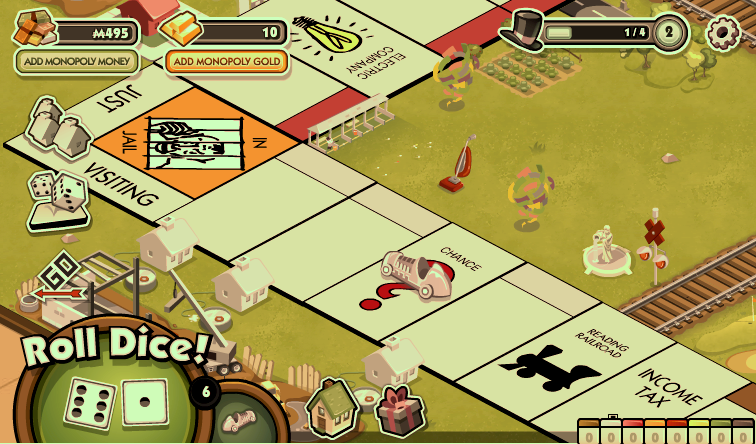
Online Gameplay- As I said before, board games can be considered archaic at times in comparison to video games or other types of games. So what’s a good way to make boar games more modern? Put them online to play! You can find games like Uno, Monopoly, Scrabble, and Risk online through various means. Flash games on Facebook also are a part of the craze, with games like Words With Friends and Trivia Crack channeling aspects of the popular board games on the market into an online equivalent to a board game.online monopoly

Greater Access to Funding- Let’s say you have an amazing idea for a board game, but can’t get a publisher to fund the game and don’t have enough money to start it yourself. What do you dokickstarter-logo? In the past you would have to take out a loan and risk your financial future for the chance of the game taking off. But now there’s a better way, and that way is the Internet. Advertising for funding from strangers may seem like an unlikely prospect, but it has started to take off in a way nobody would expect. www.kickstarter.com is the premier site for funding these kinds of projects, and there is an entire section of the site dedicated to tabletop gaming. Some notable board games funded by Kickstarter campaigns include Exploding Kittens, Scythe, and Zombicide: Black Plague. The fact that you can work for your game to be funded by people on the Internet is a huge boost to game designers all over the world.

The Internet took the world by storm, so sometimes it’s difficult to remember how new it really is. Board games have been around forever and the Internet is still just beginning. The fact that board games have not simply faded into the shadows, but rather took advantage of the new technology, says a lot about the industry and what it is working towards. If we’re lucky, board games will continue to grow and evolve while still keeping the aspects that we all love about them intact.

Card Games and Card/Board Game Hybrids

games_cards

This week I’m going to be focusing on a very specific type of game for all of my posts; I’ll be writing about card games and how they fit into the board game world. Now when most people think of card games, their mind probably jumps to games like Magic: the Gathering, Duel Monsters, or maybe even Pokémon. These are great games that have their own place in the entertainment industry, but the card games I’m talking about are unique. These card games play and look like a board game in a lot of ways, and sometimes end up being thrown into the same category as “board game”. A lot of card games even take this a step further and add pieces and boards that add to the visual effects of the game, making the difference between a card game and a board game even murkier.

Duck of DoomFor the purpose of this conversation I will consider a card game a game that plays like a board game but the majority of action is based on playing the cards rather than moving on a board. A good example of this type of game is Munchkin, a D&D based card game which uses different monster, treasure, and event cards to progress the game and utilizes a board simply keep score (in the original version of the game there wasn’t even a board, you just kept score by hand). This type of game is focused on the cards and the effects they have on the game. In contrast, a game like Clue puts as much emphasis into moving around the board and going into specific rooms as it does the cards that you use to determine who the murderer is. For additional examples of these different types of games, check out the chart below:

Type of Game Game Description Game Examples
Board Game with Cards Focuses on moving across board rather than playing cards Clue, Ticket to Ride, Settlers of Catan
Card Game/Board Game Hybrid Uses a board to facilitate the game, but majority of focus is on playing cards Munchkin, Taboo, Trivial Pursuit
Card Game No board is used, solely focused on the cards Cards Against Humanity, Exploding Kittens, Uno

So now that we’ve established the types of game we’re talking about, what are the advantages of playing a card game versus a board game? Here are a few reasons these games are worth playing:

  • Less restriction to a particular area or movement: Board games generally have a defined space in which you can move and react with your character or piece (with certain exceptions). While there are advantages to having a set area to move about, an advantage to playing a card game is that there isn’t the same restriction. Whether this means that you have more freedom within the game itself to play your cards, or if it means you can all gather around and play on the floor, the flexibility of card games is a definite advantage to playing them.
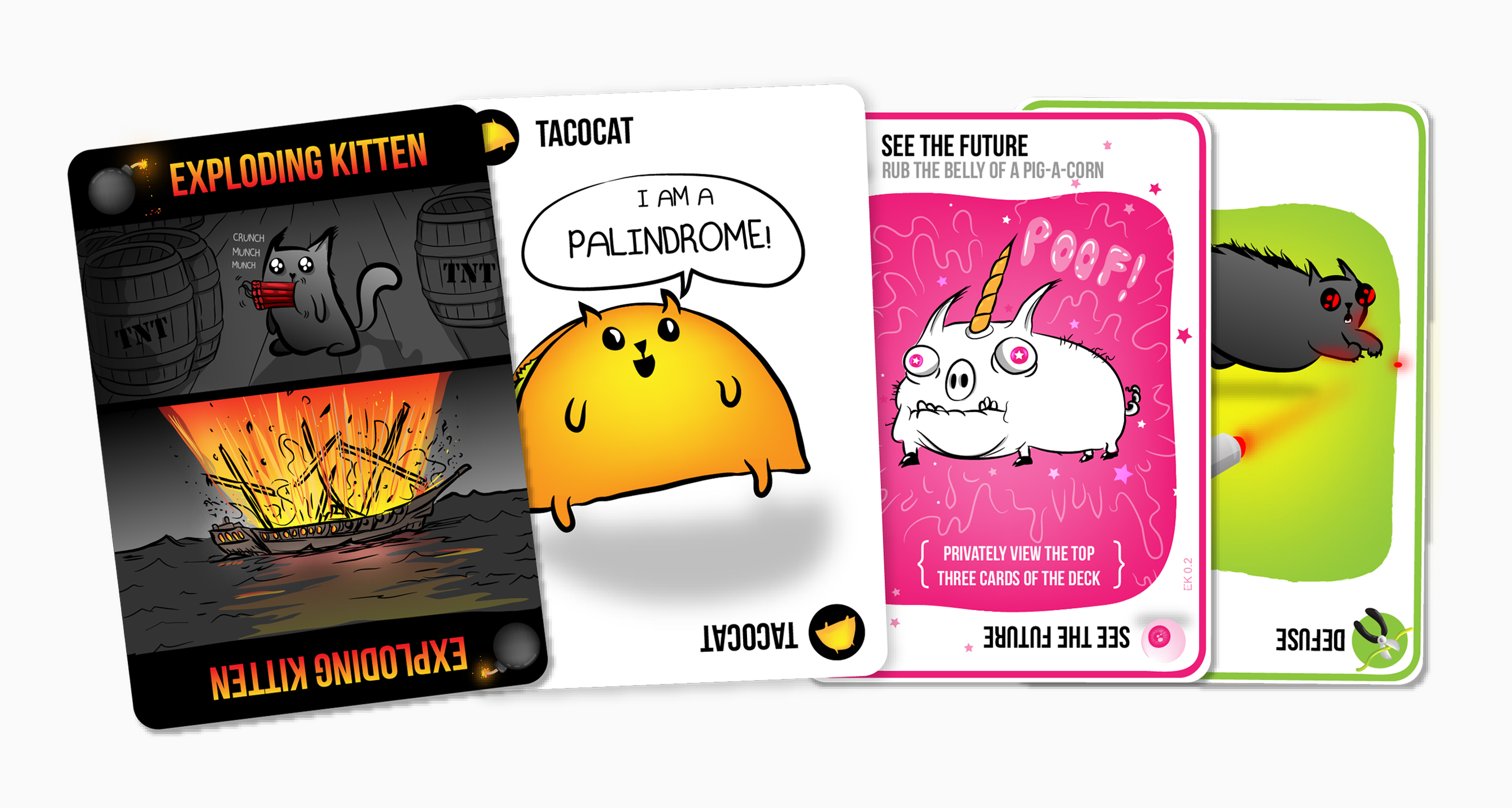
  • More opportunities for artwork and impressive images: Some of the most fun parts of a game are the aesthetics. Artwork is a huge portion of making a good game great, and card games have the ability to amplify this effect. Because there are so many different cards you can play in the average card game, artists have more of a chance to be creative and come up with great ideas. The best card games out there usually have cards with either beautiful or entertaining pictures on them.Exploding Kittens Cards
  • Similar style/feel of children’s games: When you look back at some of the games you played as a kid, it’s surprising how many of them involved a deck of cards. Games like Go Fish, War, and Cheat were common when my friends were stuck somewhere with nothing to entertain ourselves except a deck of cards. Playing a newer card game always brings me back to those times, and that excitement quickly translates into a fun experience for everyone.
  • Easy to Transport: Generally speaking, it is easier to pack a card game than it is to pack a board game. This is not always the case, but more often than not on road trips the card game is the one that will be easier to fit inside your suitcase. Bringing along some fun card games on trips can mean the difference between an entertaining evening of games and a few hours of trying to find something good on the hotel TV.

Plutomium Dragon

Ultimately card games and card/board game hybrids have many of the advantages of regular board games, with some added bonuses along the way. Similar to the board game industry, these types of games are only getting bigger and more common. Make sure to keep an eye out for some cool new card games next time you get a chance and I promise that you won’t be disappointed.


If you have any card games you are a big fan of or would like to know more about, comment below and tell me about them!

My Top 5 Board Game Publishers

There are two essential groups when it comes to creating a popular board game; designers and publishers. The designer comes up with the concept and fleshes it out into a board game. The publisher brings that idea to life and produces it/distributes it to the masses. Both groups need each other and form a symbiotic relationship, and when a game succeeds it is due to the hard work of the person who created the game and the company that gave it a chance. Because of how important these two groups are, I thought it would be a good idea to highlight some of the best designers and publishers currently in the market today.

Now, there are hundreds of board game publishers and even more designers, so this will by no means be a comprehensive list. These are just a list of some of my favorite designers/publishers currently working in the board game space. Let’s start with Publishers; my top 5 publishers in alphabetical order are below.

Days of Wonder

days of wonder

  • Best Known Game: Ticket to Ride
  • Other Popular Games: Memoir ’44, Five Tribes, Small World
  • My Favorite Game: Ticket to Ride

“Days of Wonder® develops and publishes games that Play different. From its insistence on releasing only a very limited number of new games, to its uncompromising board game production values and unique in-house digital development team, Days of Wonder consistently raises the bar with an unmatched string of hits that includes Ticket to Ride®, the world’s best-selling train game; Small World®, the legendary fantasy game of epic conquests; and Memoir ’44®, the World War II saga with 20 expansions to its credit.”-Days of Wonder About Us

Founded in 2002, Days of Wonder currently holds the record for the youngest gaming company to have a game that won the Spiel de Jahres Game of the Year award (Ticket to Ride, 2004). Their list of games is smaller than most because they focus on creating and selling high-quality products rather then mass distribution. They have also begun to dabble in online gaming, with new game apps and Steam games becoming available via their website. One of the better board game companies that might not have as large a collection as others on this list, provides entertaining and clever games across the board (pun intended).

HasbroHasbro Logo

  • Best Known Game: Monopoly
  • Other Popular Games: Twister, Jenga, Risk
  • My Favorite Game: Tie (Monopoly and Risk)

“Hasbro is a global company committed to Creating the World’s Best Play Experiences, by leveraging its beloved brands, including Littlest Pet Shop, Magic: The Gathering, Monopoly, My Little Pony, Nerf, Play-Doh and Transformers and premier partner brands. From toys and games to television programming, motion pictures, digital gaming and a comprehensive lifestyle licensing program, Hasbro fulfills the fundamental need for play and connection for children and families around the world. “- Hasbro Corporate Statement

Hasbro is the board game publisher that most people will know about. Hasbro is one of the largest game companies currently in existence; you can find their games pretty much everywhere. Most of the classic popular board games come from this company, such as Monopoly, Risk, etc. While board games are not the only thing Hasbro does, the tabletop industry will always be a large part of their portfolio. Currently the company’s major success with games is in selling their large collection of popular games to new generations.

Iello Gamesiello-logo

  • Best Known Game: King of Tokyo/King of New York
  • Other Popular Games: King of New York, Dungeon Fighter, Heroes of Normandie
  • My Favorite Game: King of Tokyo

“We specialize in games that are rich with graphics, beautiful in design, and innovative in game play. We are now a premier publisher and worldwide distributor in a fast-expanding industry. In 2012, we solidified our position by creating a U.S. division to better service the American market. This, coupled with the release of Richard Garfield’s best-selling and award-winning game King of Tokyo in 2011, put us in the forefront of international game companies.”- IELLO About Us

One of the newer board games publishers in the industry, Iello started off as a Distributor but changed course to become a publisher back in 2008. Located in France, they have become a popular publisher in America through some of their premier board game titles. Most well-known for the game series King of Tokyo, they are one of the up-and-coming game companies as they continue to expand. Their board games are all very aesthetic, with some of the best board game artwork in the last few decades of board game development.

Mayfair Gamesmayfair-games-logo_xerbm5

  • Best Known Game: Settlers of Catan
  • Other Popular Games: World Without End, King Chocolate, Extra! Extra!
  • My Favorite Game: Settlers of Catan: Seafarer’s Expansion

“Mayfair Games is a U.S. based Illinois company, incorporated in 1981 and is an international publisher of board games and card games suitable for families and hobbyists. Mayfair Games has over 100 game titles in print including many long-running series of games such as Empire Builder™ and The Settlers of Catan™ as well as many long-running standalone titles such as Alibi™ and Family Business™. Mayfair Games, making the ‘games of our generation’.”- About Mayfair Games

It’s impossible to create a list of influential board game publishers without mentioning the company that brought us Settlers of Catan.  Mayfair Games focuses on bringing European-style games to the American market, and provides numerous different types of games with over 100 games and expansions in distribution. Creating the many expansions of Settler of Catan and other popular games has also ensured Mayfair stays relevant in an ever-changing industry.

Z-Man Gamesz-man games

  • Best Known Game: Carcassonne
  • Other Popular Games: Pandemic, Shadowfist, Tales of the Arabian Nights
  • My Favorite Game: Pandemic

“Z-Man Games, Inc. is a game publisher. New Yorker Zev Shlasinger created the company in 1999 for the sole purpose of bringing back Shadowfist, one of the best multiplayer Collectable Card Games ever made. With the success of Shadowfist, Z-Man Games published its first B-Movie card game, Grave Robbers from Outer Space, and from that point on Z-Man Games decided to continue making fun, innovative games. Since that time we have published over 100 games including award-winning games, such as Agricola, Pandemic, and Merchants & Marauders – to name a few.”-   Z-Man Games About Us

Z-Man games found success by taking lesser-known games and expanding them into the gamer community, along with creating a wide variety of different games for purchase. Carcassonne, while not being the most well-known game in comparison to Monopoly or Settlers of Catan, is critically acclaimed to be one of the best board games currently in production. Many of their games have won awards and have gone on to become very popular in America as well as internationally.

If there are any other publishers you think deserve to be on this list, comment on this post to let me know!   

Board Game of the Week – Pandemic

Pandemic 5   This week, I am reviewing the critically acclaimed Matt Leacock original Pandemic. With multiple different awards from well-known game industries such as Board Game Geek and Boardgames Australia, Pandemic focuses on working as a team to stop a series of virus outbreaks from eradicating all of mankind.

Game Title: Pandemic

Release Date: 2007

Number of Players: 2-4 (4 recommended)

Average Game Time: 45 minutes

Game Publisher: Z-Man Games

Website: http://zmangames.com/product-details.php?id=1246

Game Designer: Matt Leacock

Expansions/Alternates: Yes

Available in Stores: Yes

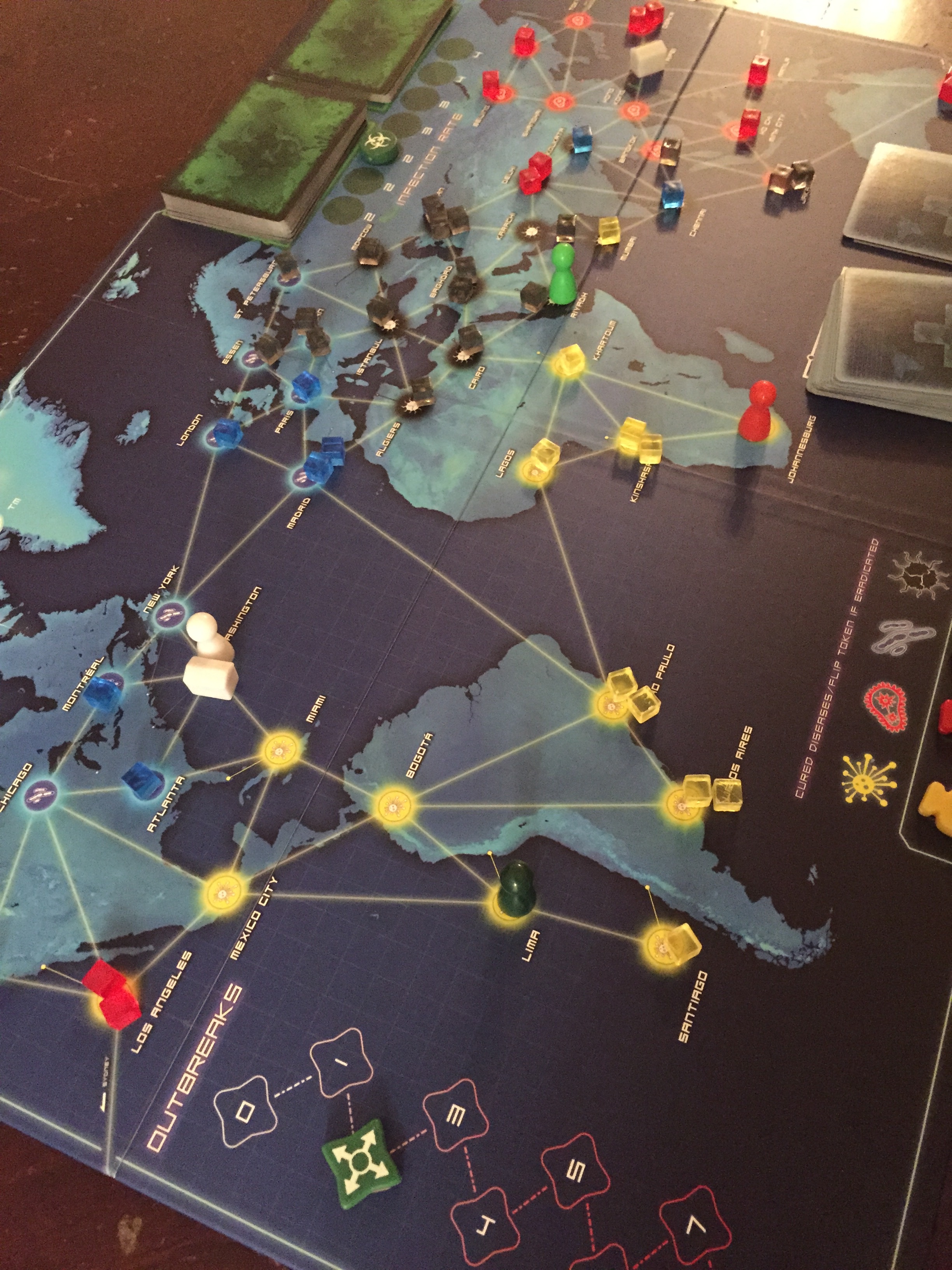
There aren’t many board games out there that ask you to combine forces against the game itself. A lot of the fun of playing games is playing against friends and family so that when you win, you can claim superiority over them (at least that’s what I enjoy about it). Still, there are a few games out there that find a way to create some form of villain or obstacle, and the object of the game is to join forces and defeat it as a group.Pandemic 4 One of the games that does this best is Pandemic, where you have to communicate and work as a team to claim victory as a single unit.

The object of this game is to stop virus outbreaks from infecting the entire world and finding cures so that you can eradicate the virus from the planet. No pressure, right? You travel around a map of the world and try to contain the 4 different viruses currently infecting the cities around the globe. The more the virus spreads, the harder it is to contain it. While you work to contain the virus, your team will also be focused on finding a cure. If you are able to cure all four viruses within the allotted time, you win. If you take too long or allow enough “outbreaks”, you lose. There are a number of other factors involved with the game, including research stations to contain outbreaks and look up cures, Epidemic cards that when drawn add more of the virus across the board, and numerous different types of event cards that bring a level of complexity and variety to the game.

Pandemic 3By far the most appealing thing about this game is that it allows you to work as a unit, but keep an individual identity during the game. Each player starts off with a specific “role”. There are seven roles you can play in any given game, and each one of them has a specific skill that can be used to improve your odds at winning. For example, the player with the Dispatcher role is able to move the other players’ pawns across the board easily, while the medic is better than the other players at stalling outbreaks. A huge part of the game is working together in order to use your role’s strengths. The more you’re able to help each other, the easier it is to complete your objectives.

The game is definitely complex, not so much in how to play but rather in the strategy and decision-making that goes into a successful game. The more you know about the game the more fun it is, because you can try a number of different strategies and work with your team members to win. Replay value for this game is high, especially since you learn more as you go and get better at playing at harder difficulties. The only real flaw in the game is the beginning; learning how to play and the best way to use your role takes effort so it can be confusing to people playing for the first time. I definitely recommend for your first play-through trying to play the game with someone who has played before rather than having a group of people with no experience. Having someone who knows the game takes some of the pressure off since they know how the roles work and the best ways to win.

Overall this game is a nice change of pace from the traditional competitive games, and the art and game play are big positives. The rules are fairly complicated and game-play can slow from player to player, but Matt Leacock has found a way to motivate people to work together in an industry that normally pushes for competition against each other. Be prepared to do a lot of critical thinking and scheming with the other players to claim victory against the ultimate Pandemic.

Jack’s Rating: 4/5 stars. pic1534148

Old School versus New School board games

Old School vs. New School comment below

As a 24-year-old, many people have told me that I’m now considered a “responsible adult.” What this means to me is that I pay my own bills, do my own laundry, deal with any issues that come up in my life, and, most importantly, talk about how older stuff is way better than newer stuff. While I begrudgingly deal with the first three parts of adulthood, there is something to be said about the era so eloquently dubbed as “the old school”; it’s got some pretty cool stuff. Board games are a great example of that. Classic games like Monopoly, Trivial Pursuit, and Yahtzee are some of the most fun games you can play. Families in particular like playing older games because it’s a good way to bond with older relatives and spend a brief moment in time learning about and understanding the past. Nostalgia runs rampant for me whenever I pull out the Game of Life, which my Dad emphatically dubbed “The Game of Death” after losing to me time and time again. These games were extremely important to my development as a child, so they will always hold a special place in my heart.

All that being said, older games aren’t the only ones with merit. As amazing as the classics are to play, there really is something special about trying out a new board game for the first time. It’s youth personified: the joy of unwrapping the game, learning the rules, and trying to get every advantage you can to win against your friends. And there’s no doubt about it, popular new games are extremely inventive and have an extremely high replay value. I’m confident that in 50+ years, games like Kings of New York and Quirkle will be just as engaging as they are now. The reason that board games are being revitalized isn’t just about the people, or the era we live in; it’s also the new board games and how impressive they have become. Ultimately I have to credit this blog to new board games, because if they didn’t hit the scene I honestly believe that there would significantly less interest in these types of games.

So do I prefer the old school or the new school? My best response to that is “ask me when I’m older.” Because right now, I can’t consider myself a true board game enthusiast without having both types of games at my disposal. Is that a cop out? Probably. Do I expect this opinion to change any time soon? Probably not. But it’s pointless for me to sit here and say that I like one game type more than the other because I like all of them so much. So when you’re sitting down for board game night with whomever you spend your evenings, whether you’re playing Risk or Myth, Sorry or Munchkin, Scrabble or Bananagrams, the year the game was made doesn’t matter. All that matters is that you enjoy it in the present.

So because I’m stuck on the fence, I’m going to let you all decide! Leave a comment below about which types of board game you prefer.

The start of it all- Settlers of Catan

yes we catan

I remember the first time I played the game Settlers of Catan. I was at my neighbor’s house and I sat down with my friend Kristina and her family to play. They proceeded to explain the rules of the game for the next 15 minutes and I nodded politely while not understanding anything they said. It took a while to get the hang of it, and even when I was playing the game I felt like I didn’t fully get all of the rules and strategy, but I ended up winning the game and then immediately going home and telling my parents we needed to buy a copy. Looking back on it, part of me has to wonder why the game caught my attention the way it did.

What is it about Settlers of Catan that makes people excited about board games? At first glance, this instant classic isn’t the type of game you would expect to completely revitalize the board game industry. Now I’m definitely not saying that Settlers is a bad game; it’s one of my all-time favorite board games, and I’ve taught many of my friends how to play with great success. But Settlers isn’t exactly the simplest game to pick up. It can be difficult to learn and the game starts off slowly while you build up resources, so in today’s fast-paced society the assumption is that nobody would have the time or attention span to learn something so complex. This game defies the stereotype of what we’re supposed to want, and yet against all odds it’s brought about a youth movement for tabletop gaming.

Personally I believe that Settlers is the type of game that is built for longevity. It has a compelling style and look that pulls you in, excellent gameplay and a strong social factor to keep you engaged, and an ever-changing layout to keep you coming back for more. Games last about an hour so you have enough time to learn the game and still get engrossed in fields of wheat and mountains of ore while you try and outmaneuver your opponents. Pretty soon you are buying the game (and its many expansions) and teaching your friends how to play, and the cycle continues.

Back in 1995, Klaus Teuber created a game that would change everything. Before Settlers, the only well known board games were older games like Clue and Monopoly that, while fun, have become more classic than groundbreaking. Settlers changed that. The game is complex, colorful and different every single time, and it spurred a new renaissance of board games that ultimately led to more popularity than ever before. The board game industry has begun to thrive, and a large part of that is thanks to Settlers of Catan. Sometimes it’s hard to see, but change can come from anywhere, including from the simple act of sitting down with your neighbors to try something new.

For more information on Settlers of Catan and all the different games and expansions, go to http://www.catan.com

Say Yes to Board Games

Hi – my name is Jack Dixon. I’m 24 years old, I live in Northern Virginia, and I love board games.

I’ve been a fan of board games ever since I was a kid. I played Monopoly and Clue with my family as far back as I can remember. I watched my parents play Scrabble when I was a toddler, and I was obsessed with this cult classic called The a MAZE ing Labyrinth. Whenever I visited extended family, we spent our evenings playing Yahtzee and laughing with my Grandparents. When I wasn’t outside playing capture the flag or kickball, I was usually sitting around a table playing some tabletop classic or exciting new game my parents found for me.

And then I got older, and fell into an age where board games weren’t as “cool.” I switched my primary indoor activity to video games, exchanging Connect 4 with N64 and hanging out with Mario instead of my folks. But here’s the thing – I never completely ignored my penchant for board games either. I always secretly wished that when my friends came over we could all sit around a table and play a game of Risk, and while that would happen every once in a while it was always the exception rather than the norm.

Then, the craziest and most unexpected thing happened: board games became cool again. Games like Settlers of Catan, Apples to Apples (or Cards Against Humanity for the adult-minded), and Pandemic hit stores, and suddenly high school and college kids everywhere started going back to their roots. Now I am able to proudly display my board games in my apartment, and when people ask me how many Monopoly boards I currently own (the answer is 12) it starts up a conversation about all the cool new games out there and how well they are tailored towards the 20-somethings of the world. I’m part of three separate groups of friends that have “board game night” once a week. Last week I taught my roommates how to play Ticket to Ride (a game which I will talk about more in my next post) and we sat around our family room drinking a few beers and chatting while we played well into the night. Board games becoming popular again has completely changed how the youth of the world interact, and it’s a beautiful thing.

My name is Jack Dixon, and I’m a board game enthusiast. And saying yes to board games has provided me with endless joy and excitement. I hope that you get a chance do the same.